Shompole’s Three Photo Hides: Where Kenya Wildlife Comes to You
By Kevin Pepper |
Most safari photography is built around motion: driving, scanning, repositioning, repeating. The Shompole hides flips that. You stop moving… and the wilderness starts doing the work.
In the Shompole Conservancy, Shompole Wilderness has built three dedicated photo hides—purpose-designed for day and night photography, with ground-level views and a setup that’s meant for photographers who already know the basics and want something rarer: intimate behavior, clean angles, and the kind of proximity you usually only get in your dreams (or in your camera trap fantasies).
Below is what each hide offers, how they differ, and why this is one of the most rewarding experiences you can add to a serious Kenya safari.
Why hides matter (especially when you’re not a beginner)
For experienced safari photographers, the challenge usually isn’t “finding wildlife.” It’s:
- getting eye-level perspective at the Shompole hides instead of top-down vehicle angles
- controlling backgrounds and shooting distance
- creating story and mood, not just a record shot
- working ethically, with minimal disturbance
- making something interesting when the light is harsh or the day is quiet
Shompole’s hides are built around that mindset. They’re sunken shipping-container hides set at waterholes the camp maintains by pumping water from the river—so animals come in naturally to drink, often at very close range.
No engine noise. No constant repositioning. Just long stretches of stillness where behavior unfolds like it should.

The three Shompole hides
1) The Plains Hide
This is the headline act—and for good reason.
What it is: a sunken, photographer-built hide with ground-level views over a small waterhole, set up for evening, overnight, and early morning sessions.
Why experienced photographers love it:
- Distance is ridiculously close. The water’s edge is roughly 10 meters at the far side, and the water comes right up to the hide.
- Lighting control for night work. The Plains Hide uses three dimmable lighting styles—front, side (adjustable height), and back lighting for silhouettes and dust glow.
- You can shoot all night. It’s set up for overnights with bunks and a loo, and the camp provides food/drinks so you stay focused and quiet.
- This is where you make portfolio frames. Not “I saw a lion” photos—reflections, low-angle predator portraits, rim-lit elephants, hyenas in dust, and those rare nocturnal visitors that don’t pose on the roadside.
Practical edge (the stuff pros care about):
- You’ll actually use your wide lens on safari. Shompole itself recommends everything from 24–70, 70–200, and up to ~300mm, because animals can be very close.
- There’s no glass between you and the scene—open windows with camouflage netting to break up silhouettes.
- And importantly: no baiting to attract carnivores.
2) The Kichaka Hide (the “bushy” counterpart)
“Kichaka” means bush, and this hide is designed to complement the Plains Hide—not compete with it.
What’s different:
- It’s set in thicker, bushier habitat with tall grass, which changes the feel of the images and the species mix that tends to appear.
- The hide is a bit larger, and it’s used on alternate nights with the Plains Hide so you get variety in backgrounds and behavior.
- Lighting is currently front + side (dimmable), with backlighting planned/coming (the camp notes this explicitly).
Why it’s gold for experienced shooters:
The Plains Hide is clean and open. Kichaka adds texture—foreground grass, more “hidden” entrances, a different kind of tension when animals materialize from cover. It’s where you go when you’ve already nailed the classic waterhole portrait and you want something with mood.
3) The Bird Hide (in camp, all-day option)
This one is often overlooked—until you realize what it does for your trip rhythm.
What it is: a smaller, ground-level hide inside camp, near the pool, designed primarily for daytime bird photography, with wildlife also sometimes coming in at night.
Key differences:
- No artificial lighting (it’s mainly a daytime hide).
- It’s close, convenient, and you can slip in between activities—great for tightening up your bird portfolio while everyone else is “resting.” (Resting is fine too… but you’re a photographer. You know how this ends.)

The hide experience: what a session looks like
A typical hide plan runs like this:
- Leave camp mid/late afternoon, cross the river by a small boat (roped across), then drive to the hides.
- Settle in for the evening and night with simple, quiet meals and drinks, then shoot through the night and into the early morning.
And because the hides are self-contained and designed for photographers—bunks, loo, camera support options—you’re not “surviving” it. You’re working the scene properly.
Shompole Wilderness lodge: the comfort that makes the hides work
Here’s the part people underestimate: the lodge matters because hide nights are intense. You want a base that’s comfortable, calm, and functional for photographers.
Rooms (tents):
- Six spacious tents on wooden decks, set up as double or twin, each with a flush toilet and shower.
- Privacy: tents are positioned so you can’t see one from another.
- Charging & electricity: generator power and charging points for camera gear (with sensible limits—no hairdryers, sorry).
- Laundry service (with the usual safari “you do your own smalls” rule).
- In-room radios, safes, and practical details that make remote safari life run smoothly.
Common areas:
- A relaxed main area with river views, including a dining “mess” and a lounge/bar deck (“the Chill”) overlooking the river—built for downtime, image review chats, and the occasional “did you see that?” moment even while you’re sitting still.
- There’s also a pool, which is exactly what your brain wants after a long night of whispering and slow shutter speeds.
- Wi-Fi via Starlink, which means you can actually move a few files, back up, and message home without sacrificing a goat to the connectivity gods.
Why Shompole is excellent for the experienced safari photographer
If you’ve done the Mara, done the Serengeti, done the “drive until something happens” routine—Shompole is different.
It rewards the skills that separate strong photographers from lucky photographers:
- Patience
- anticipation
- composition discipline
- low-angle storytelling
- night technique with controlled continuous lighting
- and the ability to stay ready when the moment arrives quietly, not with a radio call
Shompole is where you stop chasing, and start creating.

Our Kenya Safari that includes Shompole: Shompole + Mara + Amboseli
Shompole is the “slow burn” chapter of Kenya—the part where the wilderness comes to you and you work the scene like a studio that happens to have elephants. With two main hides that complement each other (open plains vs bushier habitat), you get variety in backgrounds, species mix, and the mood of your images.
But before we go there, let’s shift gears to two other of Kenya’s great icons:
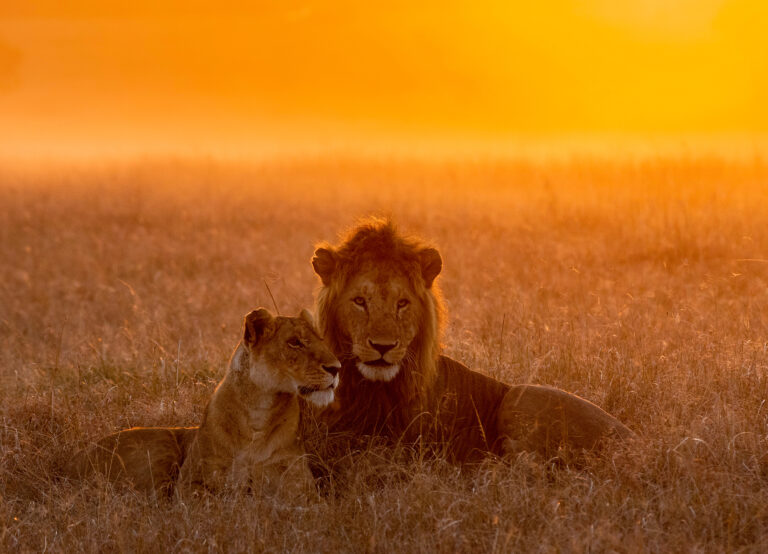
Masai Mara — predators and pressure – This is where we go to hunt the light and follow the story: lions, cheetahs, leopards, and all the tension that comes with serious predator country. It’s fast, electric, and perfect for sequence work—action, interaction, and the decisions that make strong wildlife frames.
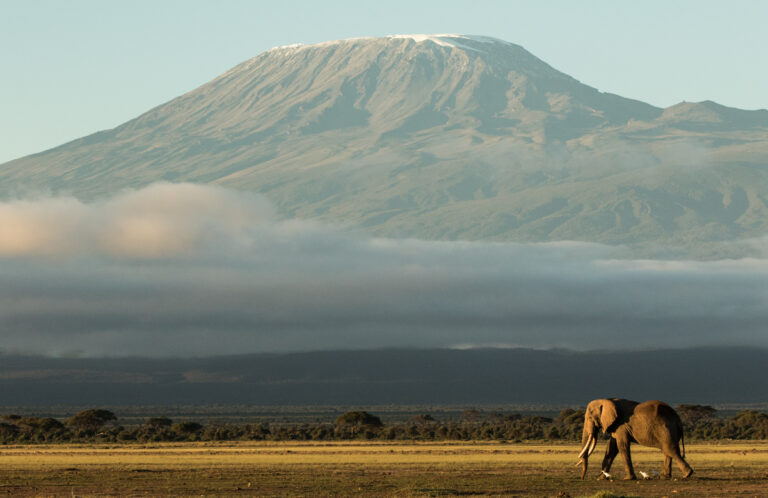
Amboseli — elephants with Kilimanjaro – Amboseli is Kenya at its most legendary: big-tusked elephants, open space, and the chance to frame those animals against the backdrop everyone recognizes—Kilimanjaro. It’s the “pin it to the wall” part of the trip.
The point of combining them? Shompole gives you intimacy and control. The Mara brings drama. Amboseli brings scale. Together, it’s Kenya in full—built for photographers who want more than “I saw it.” They want “I made it.”
Join us in Kenya for our photo safari in Amboseli, the Mara and Shompole.