Species Spotlight: Silver-throated Tanager
By Kevin Lisota |
Introduction of the Species
The Silver-throated Tanager is one of those birds that can quietly steal the show in Costa Rica. It does not have the oversized bill of a toucan or the noise level of a macaw, but it brings something just as valuable to photographers: rich color, clean design, and the kind of tropical elegance that looks fantastic in a frame. The first time you see one well, you understand the appeal immediately. It is bright, active, and beautifully put together, like the rainforest decided subtlety was overrated but still kept its manners.
Physical Description
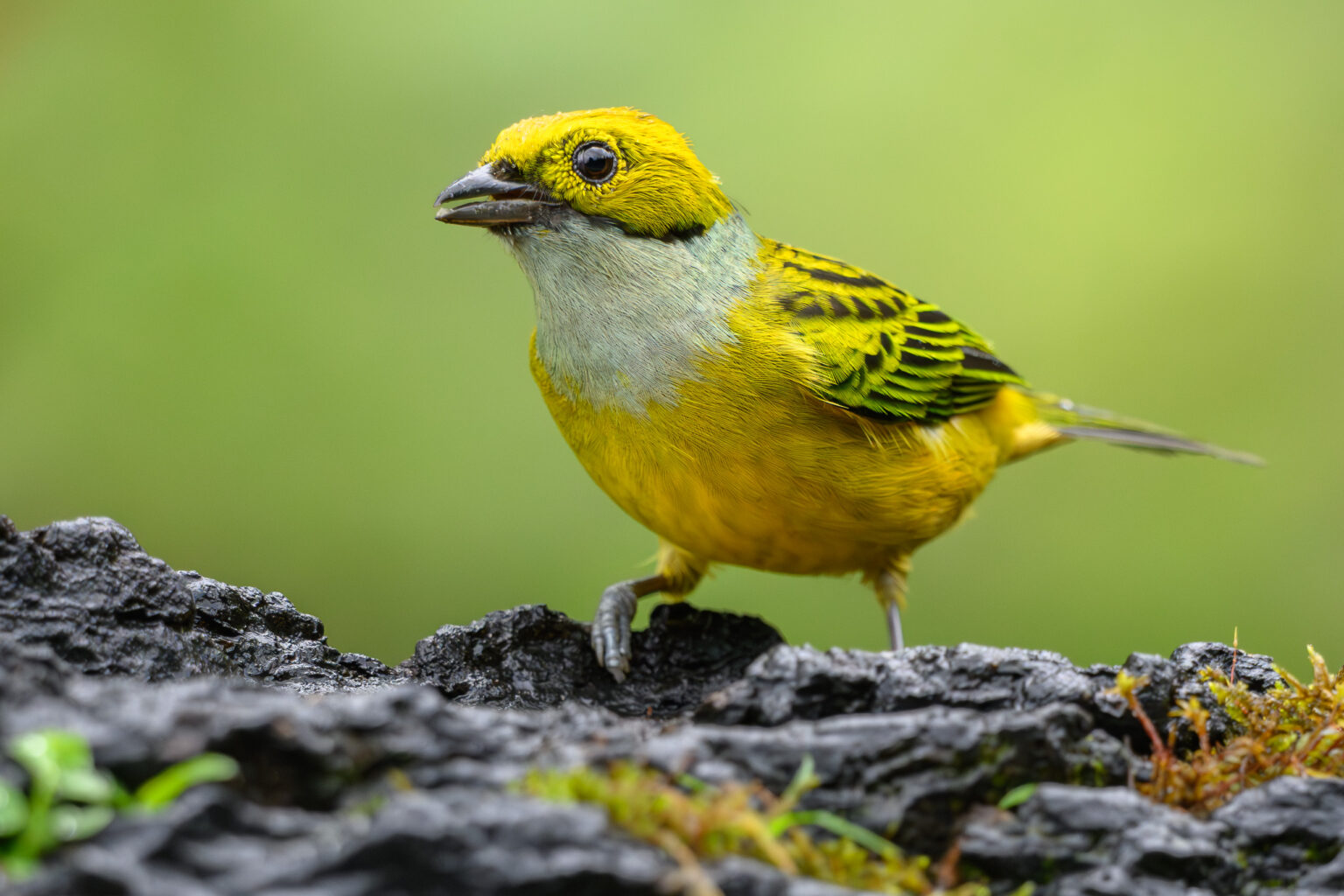
This is a small tanager, measuring about 13 cm in length and averaging roughly 22 grams. Males are especially striking, with a bright yellow body, a silvery-white throat, a black cheek stripe, and darker wings edged with green. Females are similar but slightly duller and greener overall, while immature birds are duller still, with a greyer throat and less crisp patterning. That combination of yellow, silver, black, and green makes the species wonderfully photogenic, especially against mossy or softly blurred forest backgrounds.
Native Habitat
The Silver-throated Tanager is found in humid forest, forest edge, tall secondary growth, and disturbed areas with remnant trees, especially in regions with lush vegetation and reliable moisture. It is associated with mossy forest, montane evergreen forest, and tropical evergreen forest, usually at elevations of about 600 to 1,800 meters, though it can occur outside that range as well. In Costa Rica, that means it often shows up in the kind of rich, green habitat photographers already dream about when planning a tropical workshop.
Where They Are Found in Central and South America
The Silver-throated Tanager is found in Costa Rica, Panama, Colombia, Ecuador, and northeastern Peru. In Costa Rica, it is one of those species that helps give the country its reputation for overwhelming bird diversity. It is not just another yellow bird in the foliage. It is one of the birds that makes people come home and start telling their friends they need to go to Costa Rica.
Behavior in the Wild
Silver-throated Tanagers are often seen moving actively through vegetation, sometimes in mixed feeding flocks with other small birds. They are alert, quick, and full of energy, which makes them rewarding but not always effortless to photograph. Their calls include insect-like buzzes and high-pitched notes, which fit the bird perfectly. It is a small tropical tanager, so naturally it sounds like a tiny electric wire hidden in the forest. They often forage in foliage rather than sitting out in the open for long, so good bird photography with this species often comes down to patience, clean backgrounds, and being ready when they pop into view.
Food and Eating Habits
Like many tanagers, the Silver-throated Tanager feeds on a mix of fruit and small arthropods. That flexible diet helps it take advantage of different food sources through the year and is part of why it can be found in both forest and edge habitat. For photographers, feeding behavior can also be part of the appeal. A bird reaching for fruit or pausing between quick movements often makes for a much more interesting image than a plain perched portrait.
Nesting and Breeding
The species keeps its immature or subadult plumage through the end of its first breeding season, which is a useful detail for photographers and birders trying to make sense of the birds they are seeing in the field. I did not pull a strong enough source on nest structure and breeding timing to present those details confidently here, so I would keep this section modest unless you want me to do a deeper source pass just for breeding biology.
Why Photographers Love Them
Photographers love the Silver-throated Tanager because it delivers exactly what people hope Costa Rica will deliver: tropical color, beautiful forest habitat, and a bird that feels lively without being impossible. It is small enough to challenge you, colorful enough to reward you, and elegant enough to make even simple perch shots feel polished. It is also the kind of species that adds variety to a portfolio. Not every memorable image from Costa Rica has to be a toucan, macaw, or monkey. Sometimes a small tanager on a mossy branch says the rainforest just as well.
Join Us in Costa Rica
The Silver-throated Tanager is one more reason bird photographers fall hard for Costa Rica. It is colorful, refined, and often found in exactly the kind of lush habitat that makes tropical bird photography so addictive. On our Costa Rica photo workshop, we help photographers do more than simply spot species. We help you make strong images of them — clean backgrounds, better composition, better timing, and better use of the light.
And that is what makes the trip special. You are not just coming home with a checklist. You are coming home with a portfolio full of tropical birds, rainforest atmosphere, and the kind of moments that remind you why you picked up a camera in the first place. If that sounds like your kind of trip, come join us in Costa Rica. The tanagers, toucans, frogs, parrots, and monkeys will be there, and they are not exactly camera shy.