The Big Five Animals of the Great Bear Rainforest
By Kevin Pepper |
I have travelled across Africa and photographed the Big Five, the Little Five, and yes, even the Ugly Five. I have watched lions in golden light, elephants crossing dusty plains, and rhinos disappearing into the bush just when you think something that large should be easier to keep track of.
Africa will always hold a special place in my heart.
But after years of photographing wildlife around the world, I can say this with complete honesty: one of the most exciting wildlife photography experiences I have ever had is much closer to home, in British Columbia’s Great Bear Rainforest.
This is not Africa, and that is exactly why it is so special.
The Great Bear Rainforest offers a different kind of safari. It is wilder in a quieter way. More mysterious. More hidden. Here, the drama plays out along tidal shorelines, in salmon-rich rivers, beneath towering cedars, and in channels where the fog hangs low and every dark shape on the beach makes your heart skip a beat.
For photographers, it is one of the most remarkable wildlife destinations in North America.
The Safari Feeling, Closer to Home
When people think about a great wildlife photography trip, Africa often comes to mind first. And for good reason. African safaris have earned that reputation. They offer beautiful lodges, expert guides, early mornings, long days in the field, and the thrill of never knowing what may appear next.
What surprises many photographers is how much of that same feeling exists in the Great Bear Rainforest.
No, it does not look like Africa. You will not find open plains, acacia trees, or a line of safari vehicles parked near a leopard. What you will find is something equally immersive and, for many North American photographers, far easier to reach. You trade dusty roads for saltwater channels. You trade grasslands for old-growth forest. You trade game drives for boat-based exploration.
But the rhythm feels wonderfully familiar.
You wake early with camera gear ready. You head into the field with expert local guides. You search for wildlife in changing light. You return to a comfortable lodge at the end of the day with full memory cards, tired legs, and plenty to talk about over dinner. Then you do it all again the next day.
That is safari. It just happens to wear a rain jacket instead of a sun hat.

Lodge-Based Wildlife Photography in a Wild Setting
One of the things people love most about an African safari is the combination of wild surroundings and lodge comfort. After a full day in the field, there is something special about returning to a welcoming place, enjoying a good meal, charging batteries, reviewing images, and getting ready for the next outing.
The Great Bear Rainforest offers that same appeal.
You spend your days exploring one of the wildest coastal ecosystems left in North America, then return each evening to a warm and comfortable lodge in a setting that still feels remote and deeply connected to the landscape. It is not roughing it. It is not a rushed day trip. It is a complete wildlife experience built around photographers who want to stay immersed in the destination instead of simply passing through it.
That lodge-based rhythm matters. It allows you to settle in, focus on photography, and enjoy the same kind of multi-day wildlife immersion that makes African safaris so memorable.
A Day in the Great Bear Rainforest Versus A Day on Safari in Africa
In Africa, a typical safari day often begins before sunrise. You grab coffee, climb into a vehicle, and head into the bush while the world is just beginning to wake up. Your guide reads the landscape for tracks, movement, alarm calls, and fresh signs of wildlife. The anticipation is part of the experience.
In the Great Bear Rainforest, the day begins with that same sense of purpose.
Only here, instead of climbing into a Land Cruiser, you board a boat. Instead of driving through savanna, you move through narrow inlets, tidal flats, rocky shorelines, forested islands, and glacier-carved fjords. Your guide is still reading the landscape, but also the tides, currents, weather, salmon runs, and shoreline activity.
In both places, success depends on experience. You are relying on people who understand the ecosystem, know how wildlife moves through it, and can place you in the right position when an opportunity unfolds.
That is one of the strongest parallels between the two. Neither experience is just about going out and hoping for luck. The best wildlife trips are built on knowledge, timing, patience, and being ready when the moment comes.
Wildlife That Delivers the Same Thrill
The species are different, of course, but the feeling they create can be remarkably similar.
In Africa, you may spend the day watching Elephants, Lions, Leopards, Rhinos, or Cheetahs. In the Great Bear Rainforest, your attention shifts to Spirit Bears, coastal Wolves, Black Bears, Humpback Whales, and Orcas. One destination offers open drama. The other offers suspense.
Africa often tells its stories in broad daylight across open country.
The Great Bear Rainforest reveals them more slowly. A bear appears at the edge of the trees. A Wolf moves along a lonely beach. A whale surfaces in a quiet channel. A white shape steps into a salmon stream and suddenly the whole boat goes silent.
That is part of what makes this place so addictive for photographers.
The encounters feel earned. You work for them. You stay alert. You scan the shoreline. You trust your guides. And when wildlife appears, the moment carries that same mix of adrenaline, wonder, and urgency that keeps people going back on safari again and again.
Why the Great Bear Rainforest Makes Sense for North American Photographers
For many photographers, an African safari is a major journey. It often means long international flights, multiple travel days, and a bigger logistical commitment. It is worth it, but it is not always easy.
The Great Bear Rainforest offers an alternative that still feels remote, exclusive, and deeply wild, but is much closer to home and easier for many North American travellers to reach.
That makes it appealing for several reasons.
It is easier to fit into a schedule. It feels more approachable for photographers who want a serious wildlife experience without crossing the world. It is an excellent option for those who have already travelled to Africa and want something different, and just as exciting. It is also a wonderful choice for photographers who have always loved the idea of a safari-style trip but want to start with something closer, more familiar, and simpler to access.
This is not a lesser experience. It is a different one.
And in many ways, that is exactly what makes it so compelling.
The Great Bear Rainforest’s Big Five
Africa may have its famous Big Five, but the Great Bear Rainforest has its own cast of stars. These are the animals that make this region one of the most thrilling wildlife photography destinations in North America.

Spirit Bear
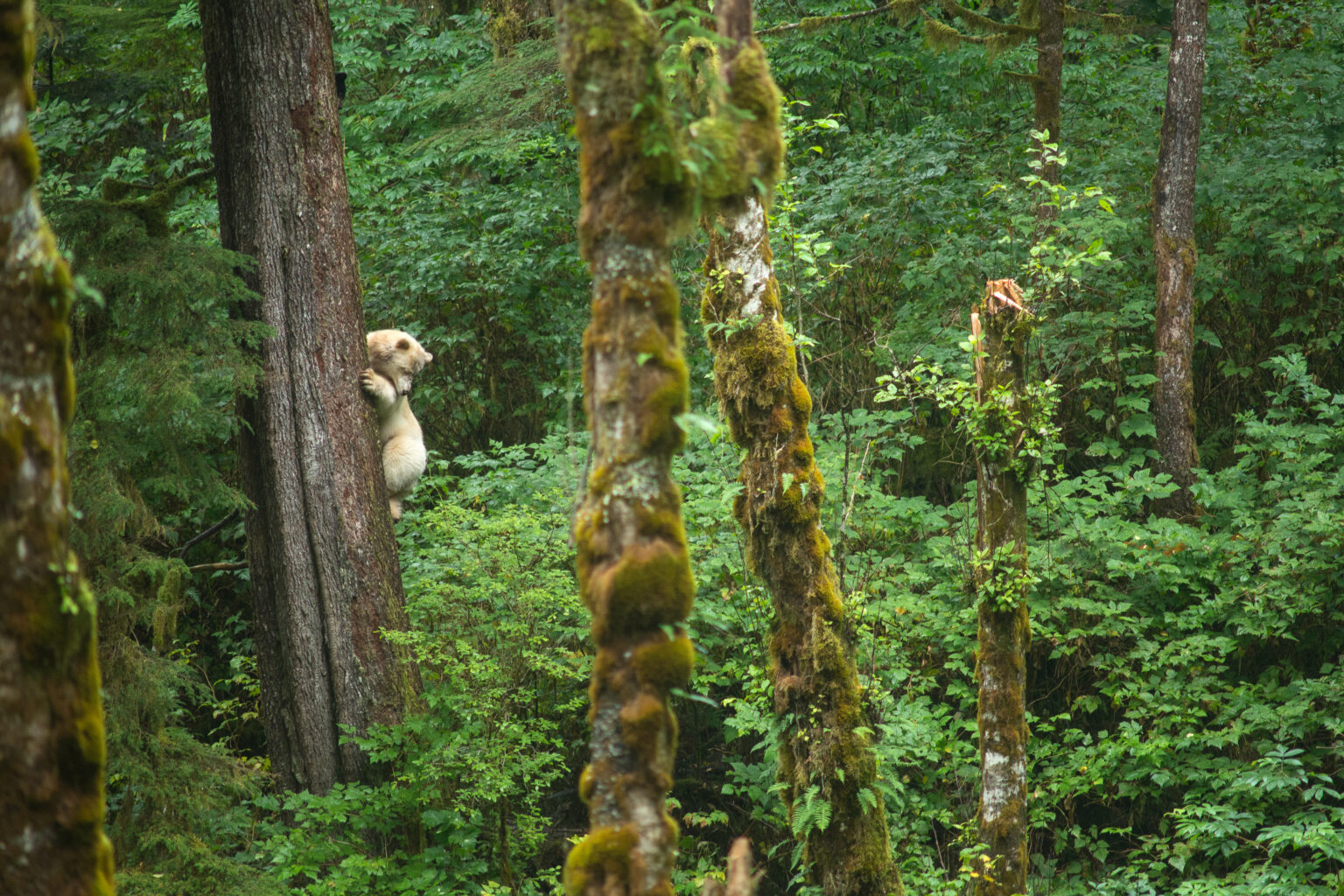
For many photographers, the Spirit Bear is the dream.
One of the rarest bears in the world, the Spirit Bear is a white-coated black bear found only in a small part of coastal British Columbia. Seeing one in the wild feels like more than a sighting. It feels ancient. Quiet. Almost unreal.
For photographers, it is one of those subjects you imagine long before you ever see it. A pale bear moving through dark rainforest, framed by moss, river stones, and the muted tones of autumn. When it finally happens, most people do not speak right away. They just stare, then scramble for their cameras once their brain starts working again.

Coastal Wolves
Coastal Wolves are one of the most elusive and fascinating predators in North America.
These wolves live along the shoreline, swim between islands, and move through a world shaped as much by tide and ocean as by forest. They are not easy to find, which only adds to their mystique.
Photographing one is not like spotting a wolf in an open snowy field. A coastal wolf can appear with little warning, slipping along a beach or emerging from the treeline like it has been there all along and you are the one who showed up late.
When it happens, it can happen fast. And when you get the shot, it tends to stay with you.
Grizzly Bears
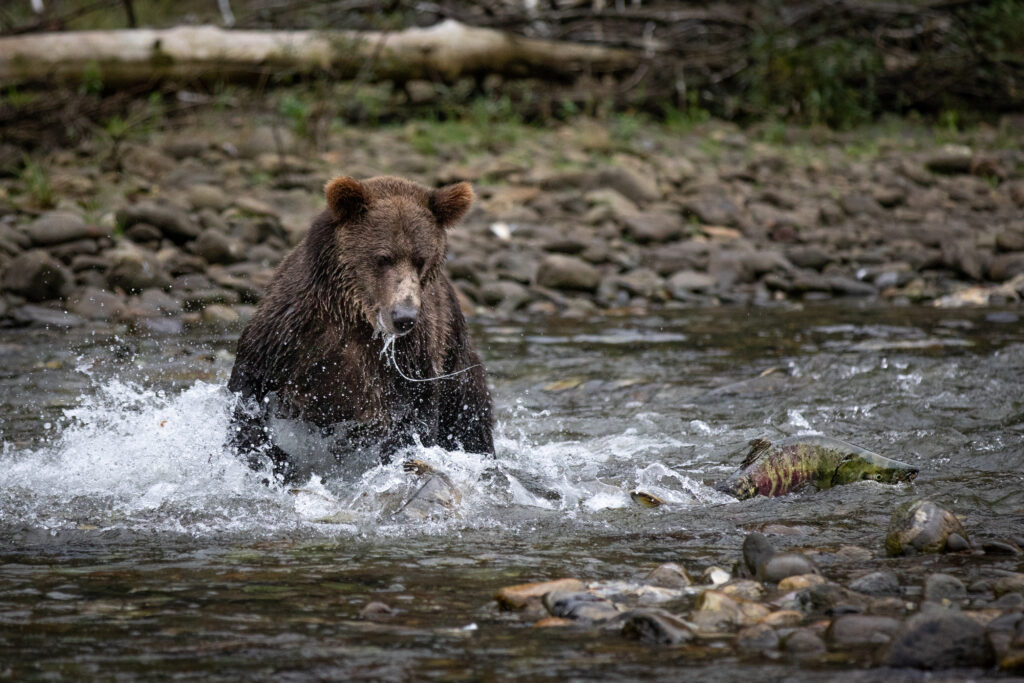
If Spirit Bears are the dream, Grizzlies are the force.
Watching a Grizzly in this environment is deeply impressive. They are powerful, focused, and completely at home in a landscape that still belongs to them. Depending on the season, you may photograph them foraging along the shoreline, moving through estuaries, or working salmon streams with absolute concentration.
For photographers, Grizzlies offer everything from environmental portraits to behaviour-rich wildlife images. A sow with cubs crossing sedge grass. A large bear turning rocks on a tidal flat. A moment of stillness before a burst of motion.
They have presence, and your images feel it.
Humpback Whales
Not all of the drama happens on land.
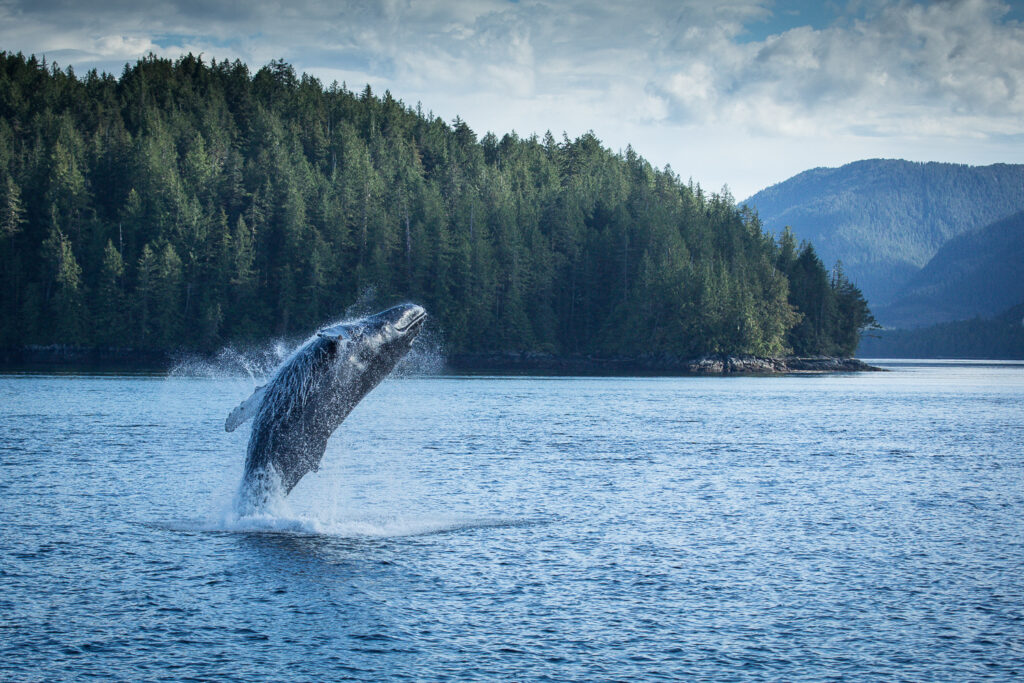
Humpback Whales are one of the great gifts of this coast. Sometimes you hear the exhale before you see the whale. Then comes the curve of the back, the lift of the tail, and another moment where the entire group goes quiet.
Photographing humpbacks in the Great Bear Rainforest is not just about action. It is also about atmosphere. Mist on the water. Dark hills in the distance. Calm channels are suddenly broken by movement. The setting gives your images a real sense of place.
And when a whale surfaces close to the boat, nobody is checking their email or social media anymore.

Orcas
Orcas bring a different energy altogether.
They are fast, intelligent, and instantly electrifying. The moment that black dorsal fin cuts through the surface, everything changes. Even experienced photographers react like it is their first time, and honestly, that is part of the charm.
Orcas test your timing, your awareness, and your ability to stay ready. They can appear suddenly and disappear just as fast. But when timing, composition, and behaviour come together, the resulting image has life in it.
That is what keeps us watching.
Why This Place Gets Under Your Skin
The Great Bear Rainforest is not just about checking species off a list.
It is about being immersed in a place where the landscape still controls the pace. It is about mornings that begin in silence except for rain on the roof or gulls in the distance. It is about scanning a shoreline and knowing that anything could appear. It is about understanding that nature does not perform on command, and that the unpredictability is part of what makes the experience so rewarding.
For photographers, that matters.
This place asks you to slow down. To pay closer attention. To appreciate atmosphere, behaviour, and subtle moments as much as obvious action. In a world that feels increasingly busy, the Great Bear Rainforest still moves by older rules. Tide in. Tide out. Salmon run. Bears return.
That rhythm gets into you.
A World-Class Wildlife Experience Without Crossing the World
People often think of African safaris as the gold standard in wildlife travel, and they deserve that reputation. I love them and always will.
But the Great Bear Rainforest belongs in the same conversation.
Not because it is similar in appearance, but because it delivers the same kind of immersion, anticipation, expert guiding, lodge comfort, and wildlife excitement that photographers love about safari. It offers all of that in a setting that feels distinctly Canadian, deeply wild, and much closer to home for many travellers.
That is a powerful combination.
For photographers who want a wildlife experience that feels every bit as memorable, but easier to reach and no less inspiring, the Great Bear Rainforest is one of the finest alternatives you will find anywhere in the world.
Join Us in the Great Bear Rainforest
At Akari Photo Tours, we look for destinations that offer more than just sightings. We want places that pull photographers into the experience, challenge them in the right ways, and leave them with images that feel connected to something real. But most importantly, with new skills learned that you can take with you long after our workshops end.
Our Great Bear Rainforest Photo Workshops do exactly that.
This is a place for photographers who want more than a quick look at wildlife from a distance. It is for those who want atmosphere, emotion, expert guiding, and the thrill of working in a landscape where every day feels full of possibility.
I have travelled far and photographed some of the world’s most celebrated wildlife. But the Great Bear Rainforest reminds me that you do not always have to cross an ocean to find something extraordinary. Sometimes the wildest safari of all is closer to home.


