The Complete Photographer’s Guide to the Great Migration in Kenya and Tanzania
By Kevin Pepper |
Every year in East Africa, one of the greatest wildlife spectacles on Earth plays out across northern Tanzania and southern Kenya. Nearly two million wildebeest, joined by hundreds of thousands of zebras and gazelles, move through the Serengeti-Mara ecosystem in search of fresh grass and water. But for photographers, the Great Migration is about far more than big numbers and dramatic headlines. It is about understanding movement, reading animal behavior, anticipating action, and being in the right place when the story unfolds.
After leading photography safaris in the Serengeti and Maasai Mara for more than a decade, I can tell you this with confidence: there is no single best time to photograph the migration. Every stage offers something different. One season brings newborn calves and predator hunts. Another brings endless columns of animals marching across the plains. Later come the famous river crossings, where hesitation, panic, instinct, and chaos all collide in a matter of seconds.
The photographers who do best on the migration are rarely the ones who simply show up at the right river. They are the ones who understand how the cycle works, what animals are involved, why they move, and what kind of images each phase of the migration can produce.
If you understand where the herds are likely to be and what behavior tends to happen in each area, you dramatically improve your chances of coming home with photographs that tell a stronger story.
What the Great Migration Actually Is
One of the biggest misunderstandings about the Great Migration is that people think of it as a single event. It is not. The migration is a year-round movement of animals through the Serengeti-Mara ecosystem, shaped by rainfall, fresh grass, water availability, breeding cycles, and survival.
At the center of it all are the wildebeest. They are the engine of the migration. Traveling with them are large numbers of plains zebra and smaller groups of gazelles, especially Thomson’s gazelles. These species often move together because they feed differently and benefit from the same changing conditions. Zebra can graze taller, rougher grasses first, which helps open up feeding opportunities for wildebeest, who prefer shorter, more nutritious growth. Gazelles then take advantage of what remains. Different mouths. Same dinner plan.
For photographers, this matters. The migration is not just about wildebeest. It is about the interaction of species, the rhythm of the herd, and the scale of an entire ecosystem in motion. Zebra add beautiful graphic contrast. Gazelles add elegance and lightness. Wildebeest bring mass, movement, and tension. When all three are working together in a frame, the image says more about the migration than a simple portrait ever could.
The migration also creates one of the richest predator-prey stages in the world. Lions, cheetahs, hyenas, jackals, and crocodiles all take advantage of the moving herds. That is why this event is so addictive for wildlife photographers. It is not just about abundance. It is about behavior, pressure, timing, and the constant drama of survival.
The Full Great Migration Calendar (Month by Month)
January – February
Location: Southern Serengeti and Ndutu Plains
Photography Focus: Calving season, predator action, and intimate wildlife behavior
This is one of the most exciting times of year for wildlife photographers in East Africa. The southern Serengeti and Ndutu Plains become the stage for one of the most intense and rewarding chapters of the migration. Nearly half a million wildebeest calves are born within a short period, which means life and death are playing out constantly across the plains.
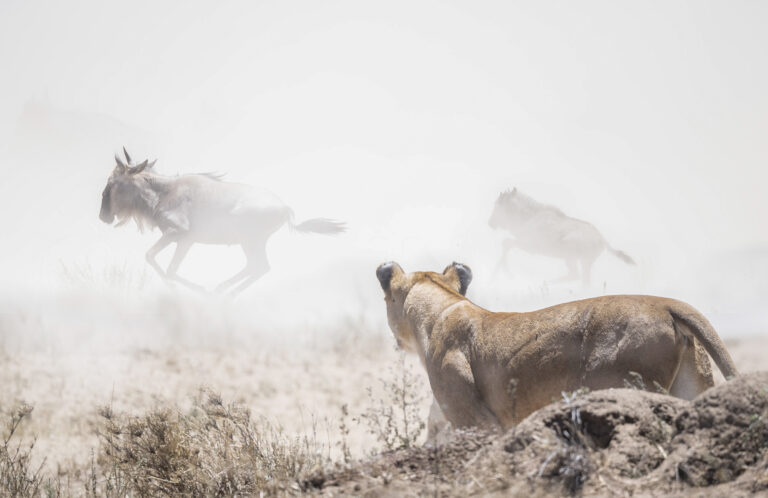
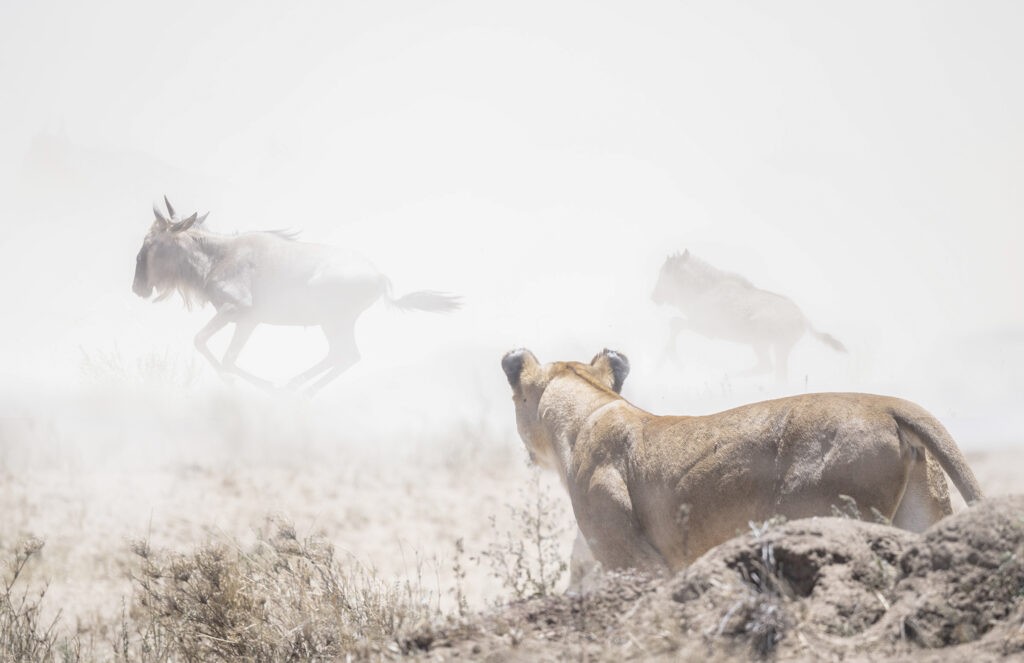
For photographers, this season offers a powerful mix of tenderness and tension. One moment you may be photographing a newborn calf still unsteady on its feet. The next, a cheetah may lock onto the herd and the mood changes instantly. Lions, hyenas, jackals, and cheetahs all know this is a time of opportunity.
This is also one of the best times to photograph cheetahs in all of Africa. The open plains make it easier to see behavior developing before the hunt begins, and the clean backgrounds can help you create stronger action images.
Photographic opportunities include:
- Newborn portraits
- Mothers and calves interacting
- Predator hunts on open plains
- Dust-filled chases
- Environmental images showing huge herds across short grass plains
This is the stage of the migration for photographers who want behavior, emotion, and storytelling.
March
Location: Southern Serengeti transitioning toward the Central Serengeti
Photography Focus: Strengthening calves, growing herd movement, and scale
By March, the calves are stronger and more mobile. The herds begin to gather momentum as grazing conditions change and the animals start moving northwest. This is a transitional period, but it is often better than people expect.
For photographers, March can produce beautiful images of mass and movement. The migration begins to feel less like scattered family groups and more like a connected force. It is a very good time to photograph long herd lines, dense groupings of wildebeest and zebra, and scenes that emphasize sheer scale.
This is also a nice time to photograph the relationship between adults and slightly older calves, who are now active enough to create energy in the frame without losing that youthful look that makes calving season so compelling.
April – May
Location: Central and Western Serengeti
Photography Focus: Long columns of animals, dramatic skies, atmosphere, and fewer vehicles
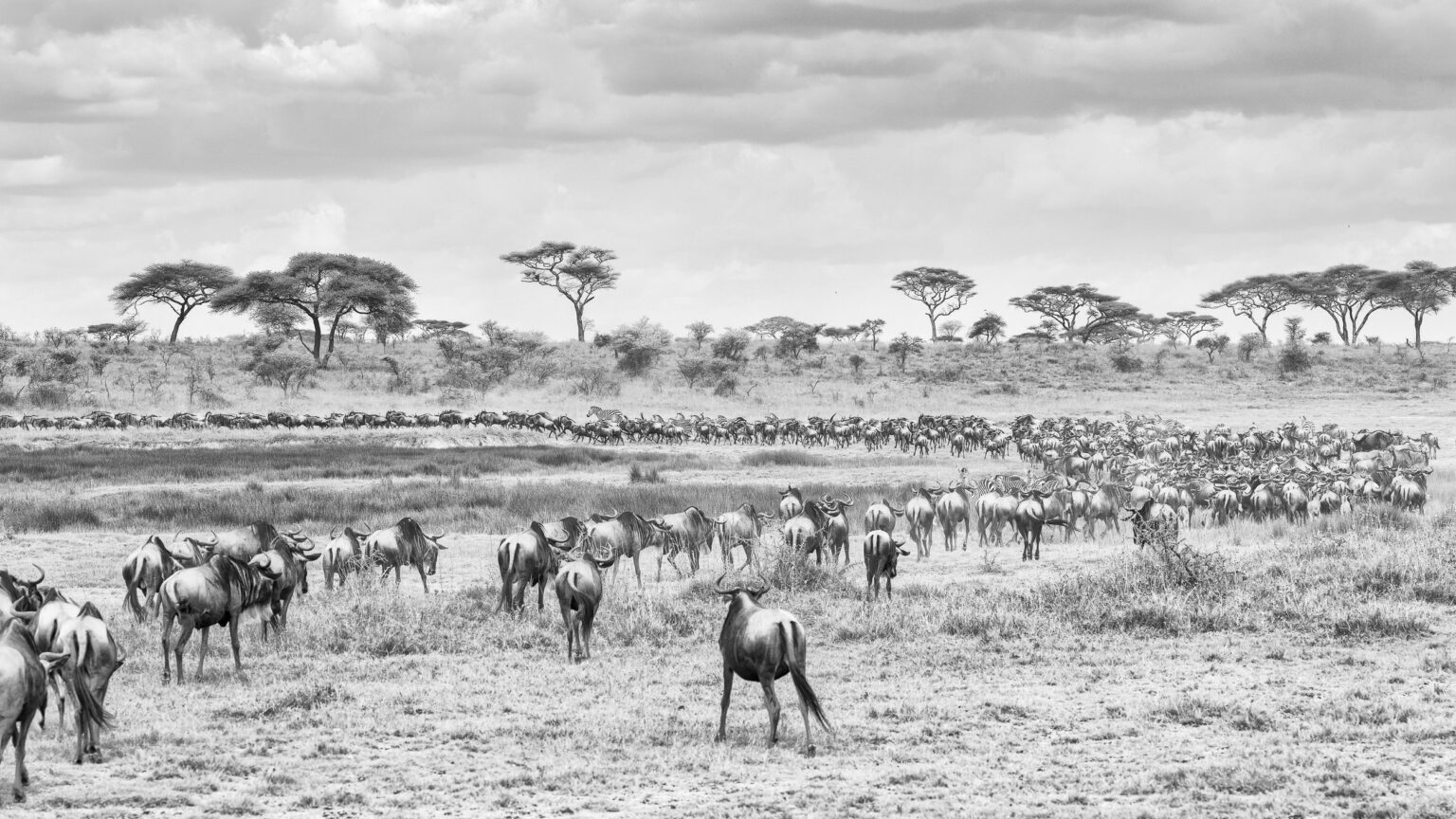
During the long rains, the migration begins to stretch into long marching columns that can seem endless. This is when the event starts to feel truly epic. Instead of isolated pockets of animals, you often see lines of wildebeest and zebra moving across the landscape for miles.
For photographers, this period can be outstanding for wide compositions and environmental storytelling. Rain clouds build over the plains. Light can be moody and dramatic. Fresh grass and darker skies often give the images a richer atmosphere than the dusty drama people usually associate with the migration.
This can also be a quieter period for tourism, which gives photographers more room to work and often a little more freedom in vehicle positioning.
You may see:
- Endless lines of wildebeest crossing open country
- Zebra helping define shape and rhythm in the herd
- Storm clouds building over the Serengeti
- Green landscapes and changing light
- Cleaner working conditions around the animals due to fewer vehicles
If you love scale and mood, this is a very rewarding time to be there.
June
Location: Western Serengeti Corridor and Grumeti region
Photography Focus: Early river crossings, herd compression, and rising tension
In June, the migration begins entering one of its more dramatic phases. The herds push into the western corridor, where early river crossings at the Grumeti can produce excellent photographic opportunities.
These crossings are smaller in scale than the Mara River spectacles later in the season, but they are still exciting. More importantly, June is when photographers start seeing a real shift in herd behavior. Animals bunch up more tightly. Movement becomes less casual. Obstacles begin shaping the story.
Expect to photograph:
- Herds stacking up before crossing
- Crocodiles waiting along riverbanks
- Wildebeest circling, hesitating, and testing the edge
- Dust, confusion, and quick bursts of action
This is the beginning of the migration’s most dramatic stage, and it can be especially rewarding for photographers who enjoy anticipation just as much as the action itself.
July
Location: Northern Serengeti
Photography Focus: Herd buildup before Mara River crossings
By July, many of the large herds reach the northern Serengeti and begin gathering along the Mara River. This is one of the most visually tense periods of the migration. Animals may wait for hours, or sometimes days, before a crossing actually happens.
For photographers, that waiting period is part of the story. Wildebeest bunch together, push toward the edge, pull back, circle again, and become increasingly agitated. Zebra stand alert on the margins. Dust rises. Crocodiles hold quietly in the water below. You can feel the uncertainty.
You will often see:
- Herds gathering at the bank
- Wildebeest testing the water and retreating
- Crocodiles lurking below the surface
- Nervous movement and false starts
- Beautiful storytelling opportunities before the actual crossing begins
July rewards patience. It is not always about the leap. Sometimes the better frame is the hesitation just before it.
August – September
Location: Maasai Mara, Kenya
Photography Focus: Iconic river crossings and peak migration drama
This is when many of the most famous migration photographs are made. Large herds gather at the Mara River and, when the moment finally comes, they launch into one of the most chaotic and dramatic wildlife events on Earth.
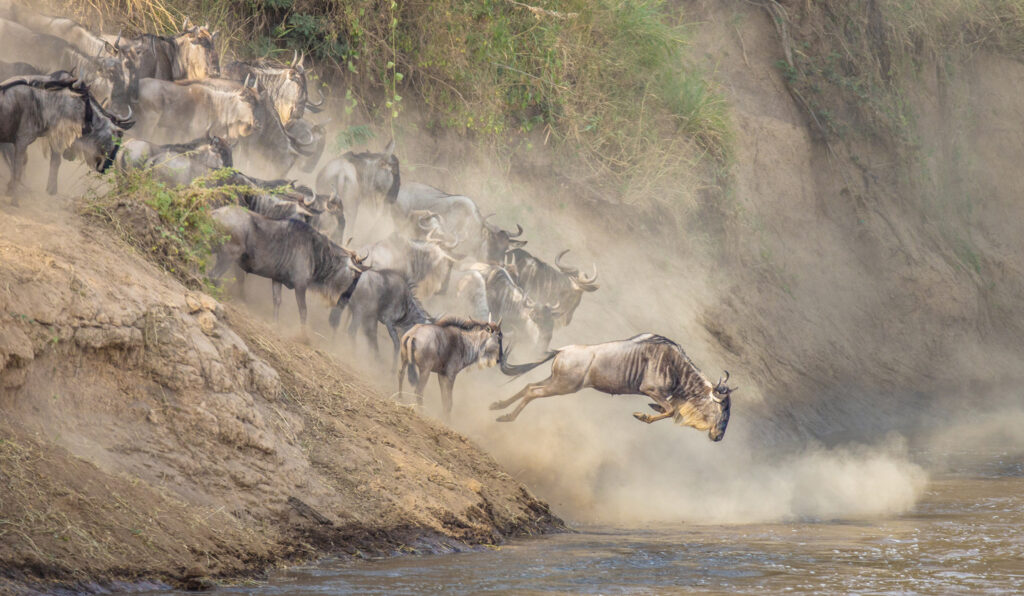
Thousands of animals may gather at the bank, hesitate, and then suddenly commit all at once. Wildebeest leap from steep riverbanks, slam into the water, swim in panic, and scramble up muddy banks on the far side. Crocodiles strike from below. Calves struggle to keep pace. Bodies crash into each other. Spray, mud, and tension fill the frame.
These scenes are unforgettable, but they are also hard to photograph well. The action is fast, the animals move unpredictably, and the composition can become messy very quickly. This is where preparation matters.
The scenes often include:
- Wildebeest leaping down steep banks
- Massive splashes and churning water
- Crocodile attacks
- Herds piling up on muddy exits
- Separated calves and frantic movement in the current
For many photographers, this is the dream stage of the migration. And for good reason. It is raw, loud, chaotic, and unforgettable.
October
Location: Maasai Mara and Northern Serengeti
Photography Focus: Predator behavior, herd movement, and late-season migration drama
By October, the migration begins shifting south again. The herds are still large, but crossings are often less predictable than they are in peak season. This can actually work in a photographer’s favor.
Late migration often produces excellent predator opportunities as lions and hyenas focus on exhausted, injured, or vulnerable animals. There can be a tougher, more emotional edge to the photography during this phase. The giant crossing spectacle may be less consistent, but behavior can still be excellent.
This is a strong month for photographers who want more than just the textbook river crossing frame.
November
Location: Eastern and Central Serengeti
Photography Focus: Return movement and green landscapes
As the short rains begin, the herds start moving back toward the southern Serengeti. The mood of the migration changes again. After the chaos of the river season, this stage often feels more fluid and transitional.
For photographers, November can bring beautiful scenes of animals crossing greener landscapes with fresher tones in the background. It is a quieter chapter, but a very worthwhile one. The migration is resetting, and that return movement has its own kind of beauty.
December
Location: Southern Serengeti
Photography Focus: Herd regrouping and the setup for calving season
By December, the migration has largely returned to the southern plains, completing the yearly cycle. The herds spread out again, conditions begin aligning for calving season, and within weeks the whole story starts over.
This is a wonderful time to photograph the migration as a complete ecosystem story. The noise of river crossings is gone. The mood feels calmer. But underneath that calm is the buildup to another season of births, predators, and movement.
One of the biggest misconceptions about the Great Wildebeest Migration is that river crossings happen every day.
They don’t.
This is one of the most important things a photographer can understand before booking a migration trip. River crossings are unpredictable. They are not scheduled events, and no serious guide should pretend otherwise.
In reality, herds may gather at the Mara River for hours or even days. They move toward the water, pull back, regroup, and test the edge again. Wildebeest are nervous animals, and with good reason. The river is dangerous. Strong current, steep banks, confusion in the herd, and massive Nile crocodiles all raise the stakes.
Photographers will often witness what guides call false starts. A few animals edge into the water, panic, and scramble back. Dust rises. The herd shifts. The tension builds. Then it fades. Then it builds again.
And then, without warning, everything changes.
One wildebeest jumps. Sometimes brave. Sometimes foolish. Usually both.
Within seconds, instinct takes over and the herd surges behind it. Thousands of animals pour down the bank and into the river. The scene explodes with water, mud, noise, and panic.
For a few wild minutes, it becomes pure migration drama:
- Wildebeest splashing through the river
- Crocodiles lunging from below
- Calves fighting to stay with the herd
- Animals climbing and slipping up muddy exit banks
- Dust, spray, and total confusion everywhere
And just as quickly as it began, it is over.
Typical timing for Mara River crossings:
- Late July through early October
- Peak activity is often August and September
Even during peak season, there is never a guarantee of a crossing on any given day. Some days the herd gathers and never commits. Other days multiple crossings happen within hours.
That uncertainty is exactly what makes photographing the Mara River so thrilling. When the moment comes, it unfolds fast. If you are ready, you may capture one of the most dramatic wildlife events on Earth. If you are not, all you will have is a good story and a slightly elevated heart rate.
Predator Behavior During the Great Wildebeest Migration
Where there are millions of animals, predators are never far away. The migration attracts extraordinary predator activity, and understanding that behavior can help photographers anticipate the action before it happens.
Lions
Lions often position themselves near herd routes, ambush points, and water sources. During times of confusion, especially around crossings or large concentrations of animals, they have opportunities to target adults as well as calves.
For photographers, lion behavior is often best before the actual hunt begins. Watch for body posture, stillness, intense focus, and subtle movement between members of a pride. Those quiet moments often tell you what may happen next.
Cheetahs
Cheetahs are especially productive during calving season in the southern Serengeti. The open plains give them ideal hunting terrain, and the abundance of young animals makes this one of the most exciting times to photograph them.
The advantage for photographers is visibility. You can often see the build-up before the chase starts. A resting cheetah can become a hunting cheetah in seconds, so reading posture and attention is critical.
Hyenas
Hyenas are often overlooked, which is a mistake. They are major players in the migration. They follow the herds closely, test weak animals, steal kills, and create some of the grittiest and most emotional wildlife scenes you may witness.
If you want your migration portfolio to feel complete, do not ignore hyenas. The story of the migration is not only about beauty. It is also about pressure, opportunism, and survival.
Crocodiles
The Mara River holds some of the largest Nile crocodiles in Africa, and during crossings they wait with astonishing patience. Their presence changes the behavior of the herd long before an actual strike happens.
For photographers, crocodiles are part of the tension even when they are barely visible. They shape the hesitation, the danger, and the panic that make river crossings so dramatic.

Camera Settings for Great Wildebeest Migration Photography
Wildlife action happens fast during the migration. Having the right settings ready can make the difference between getting the shot and staring at your screen later wondering why the best moment in Africa looks like it was photographed during an earthquake.
These are strong starting points, but they are not rules carved into stone. Light, subject distance, and behavior all change quickly, so the best photographers stay flexible.
Action Photography (Hunts or Crossings)
- Shutter Speed: 1/2000 sec or faster
- Aperture: f/4 to f/6.3
- ISO: Auto ISO
Fast action needs fast shutter speeds. River crossings, predator chases, lunging crocodiles, and chaotic herd movement can all change in a split second. It is usually better to tolerate a little extra ISO than to lose detail to motion blur.
Herd Scenes and Environmental Shots
- Shutter Speed: 1/500 to 1/800 sec
- Aperture: Around f/8 for depth
- ISO: Adjusted to suit conditions
When the subject is the scale of the herd rather than explosive action, you can slow down a little and think more about composition, layering, and environment.
A Few Practical Tips
Always shoot in continuous burst mode when behavior is building. The key moment may last less than a second.
Use autofocus settings that let you react quickly, but remember this: camera menus matter less than behavior awareness. Photographers who read the scene well usually outperform photographers who only obsess over settings.
Also, do not forget to step back mentally and ask what the picture is actually about. Is it action? Chaos? Scale? A single animal inside a larger story? Your settings should support the image you are trying to make.
Best Lenses for the Great Wildebeest Migration
One of the biggest challenges of photographing the migration is that the subjects can change instantly. One moment you need reach for a distant lion. The next, thousands of wildebeest are pouring through a river or stretching across the entire horizon.
A strong safari kit should give you flexibility.
100mm – 400mm or 200mm – 500mm
This is your primary wildlife lens range and the workhorse for most migration photography. It is ideal for predator portraits, medium-distance herd scenes, river crossing action, and general wildlife behavior.
If you are only bringing one main wildlife lens, this is the range that will likely live on your camera most of the time.
400mm – 600mm
This range is excellent for isolating animals during crossings, capturing distant predator behavior, and picking out moments within crowded scenes.
Longer glass is especially useful when you want to simplify the chaos and focus on one expression, one interaction, or one animal fighting through the disorder.
70mm – 200mm
This is one of the most useful lenses for storytelling and one many photographers do not use enough on safari. It allows you to show animals in the landscape, create environmental portraits, and include more context around the subject.
If you want your portfolio to feel varied and complete, this range matters.
24mm – 70mm or Wider
Wide-angle lenses are often overlooked on migration trips, but they are essential for capturing scale. Some of the most powerful migration images are not tight action shots. They are wide photographs showing endless animals under dramatic skies, or small groups of wildlife moving through an immense landscape.
If the migration is about scale, then wide glass deserves a place in the bag.
What Makes the Great Migration Hard to Photograph Well
This may sound strange, but the migration is not difficult because there are too few animals. It is difficult because there are too many.
A frame filled with wildebeest can be impressive, but not always effective. Strong migration photography still depends on clean composition, subject separation, good light, and clear storytelling.
The best migration images usually do one of four things well:
- Show scale in a clean, readable way
- Isolate behavior within chaos
- Capture tension before action breaks open
- Place animals into a broader landscape story
That might mean focusing on a single zebra against a wall of wildebeest. It might mean waiting for a calf to separate just enough from the herd. It might mean using dust, light, and spacing to simplify a scene that initially looks overwhelming.
The migration gives photographers endless material. But strong images still come from decisions, not luck.
Final Thoughts for Photographers
The Great Migration is not just about animals moving across Africa.
It is about instinct. Pressure. Timing. Patience. Anticipation. It is about understanding that the story changes every month, and that each chapter offers different photographic rewards.
Some photographers dream of river crossings. Others want calving season, cheetahs on the southern plains, or endless lines of wildebeest under stormy Serengeti skies. The truth is, they are all right. The best time to photograph the migration depends on the kind of story you want to tell.
Every year, the migration writes a different version of that story. That is why photographers return again and again. The light changes. The weather changes. The herd changes. The behavior changes. But the magic never fades.
Join Us on an African Photo Safari
Experiencing the Great Wildebeest Migration with experienced photography guides can dramatically improve your chances of capturing these moments.
On our Akari Photo Tours safaris in Tanzania and Kenya, we focus on positioning photographers in the right places at the right time—while teaching field techniques that help you anticipate wildlife behavior before it happens.
If photographing the Great Migration has been on your bucket list, Africa is waiting. And trust us… once you witness the migration in person, you’ll understand why photographers return year after year.