
The Spirit Bear: Exploring the mystique of the rare Kermode bear
By Kevin Pepper |
In the lush, temperate rainforests of British Columbia’s central and north coasts, a ghost roams the moss-draped undergrowth—a rare and sacred animal known as the Kermode bear, or more affectionately, the Spirit Bear.
This elusive creature is not an albino bear, as some might assume. It is a subspecies of the North American black bear (Ursus americanus kermodei), and about 10–20% of the Kermode population is born with creamy white or pale blonde fur due to a recessive gene carried by both parents. Most of the Kermode bears are black, but the striking white individuals have captivated imaginations and inspired legends for generations.
Where can you find the Kermode bear?
The Kermode bear is native to a particular region: the Great Bear Rainforest, a vast stretch of coastal rainforest along British Columbia’s central coast. This pristine wilderness—one of the world’s most extensive remaining tracts of temperate rainforest—is where you’ll find the highest concentration of Spirit Bears.
Princess Royal Island, Gribbell Island, and the nearby mainland in the territory of the Gitga’at and Kitasoo/Xai’xais First Nations are some of the best places to glimpse a Spirit Bear in the wild, potentially. These areas are remote, accessible only by boat or floatplane, and protected through conservation agreements and Indigenous stewardship.
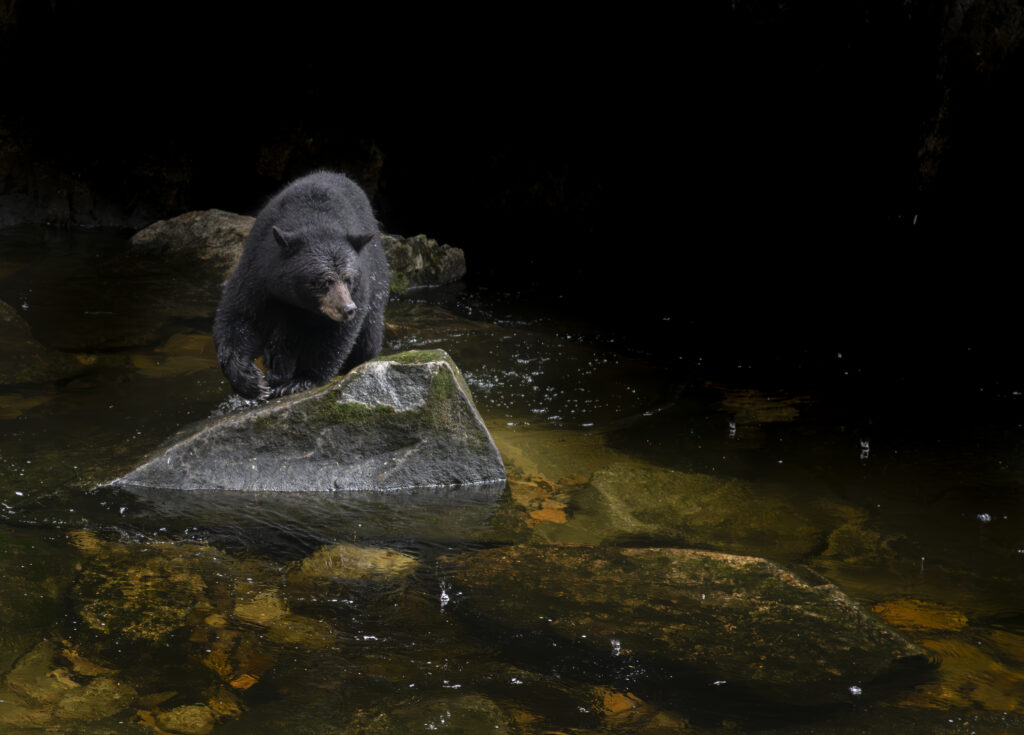
White bears tend to prefer river valleys rich in salmon, especially during the autumn spawning season. The light color of their fur gives them a slight advantage when fishing in daylight—salmon are less likely to spot them from beneath the water, making them more effective hunters than their darker cousins.
Spirit Bear in indigenous folklore
To the indigenous peoples of the Pacific Northwest, the Spirit Bear holds deep cultural and spiritual meaning. According to Tsimshian legend, the Raven—the creator of the world—made one in ten black bears white to remind people of the time when the Earth was covered in ice and snow and to encourage them to value peace and reflection over pride and arrogance.
For the Gitga’at Nation, the Spirit Bear is not just a rare animal—it is a guardian of the forest, a symbol of harmony and respect for nature. Seeing one is considered an omen, a powerful and sacred experience, and many Indigenous communities work tirelessly to protect the bear and its habitat from industrial development, logging, and climate change.
Photographing the Spirit Bear
Photographers worldwide dream of capturing an image of this mythical creature. Photographing Spirit Bears requires patience, respect for the environment, and local knowledge. Due to the bear’s rarity and the sensitivity of their habitat, access to the best viewing areas is usually guided by indigenous guides or local conservationists.
Photographic opportunities are best during the fall salmon run, typically from late August through October. The bears gather at rivers and creeks to feed, and it’s a photographer’s dream setting with the golden hues of autumn in the rainforest.
But photographing these animals is about more than just getting the image. It’s about immersing yourself in a deeply spiritual and fragile ecosystem where every rustling leaf, distant raven call, and swirling mist carries meaning.

A living symbol of conservation
The Spirit Bear has become a powerful symbol for environmental protection. It was a key figure in the efforts to halt logging in the Great Bear Rainforest, which led to a landmark agreement in 2016 to protect 85% of the forest from industrial logging.
Today, efforts continue to preserve the habitat not just for the Kermode bear but for the entire web of life in the region—salmon, wolves, bald eagles, ancient cedars, and the communities that’ve called this land home for millennia.
Final thoughts
The Kermode bear is more than just a rare animal—it’s a bridge between worlds: science and spirit, myth and reality, past and future. It reminds us that even in our modern, high-speed world, there are still pockets of mystery waiting to be respected, preserved, and quietly witnessed.
If you’re ever fortunate enough to spot a Spirit Bear, take a moment to be present. You’re looking at a creature whose very existence is a miracle—and a message.
Read about all our wildlife photography workshops at Akari Photo Tours.


