Deadvlei in Namibia: A photographer’s dream location
By Kevin Pepper |
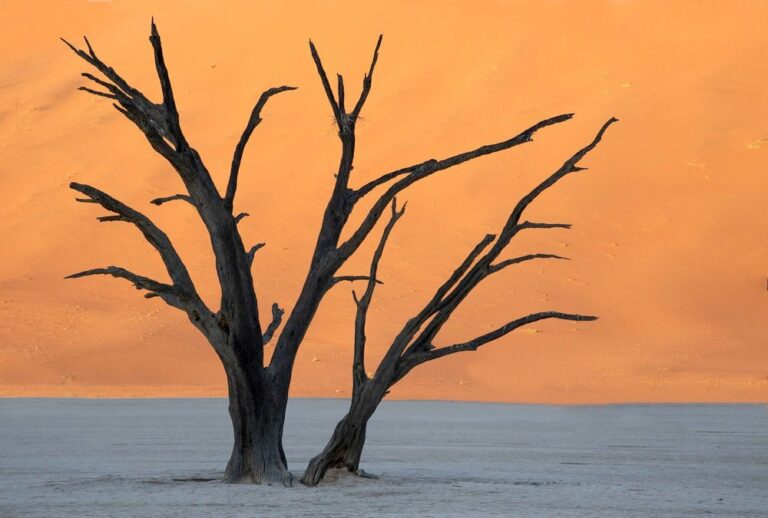
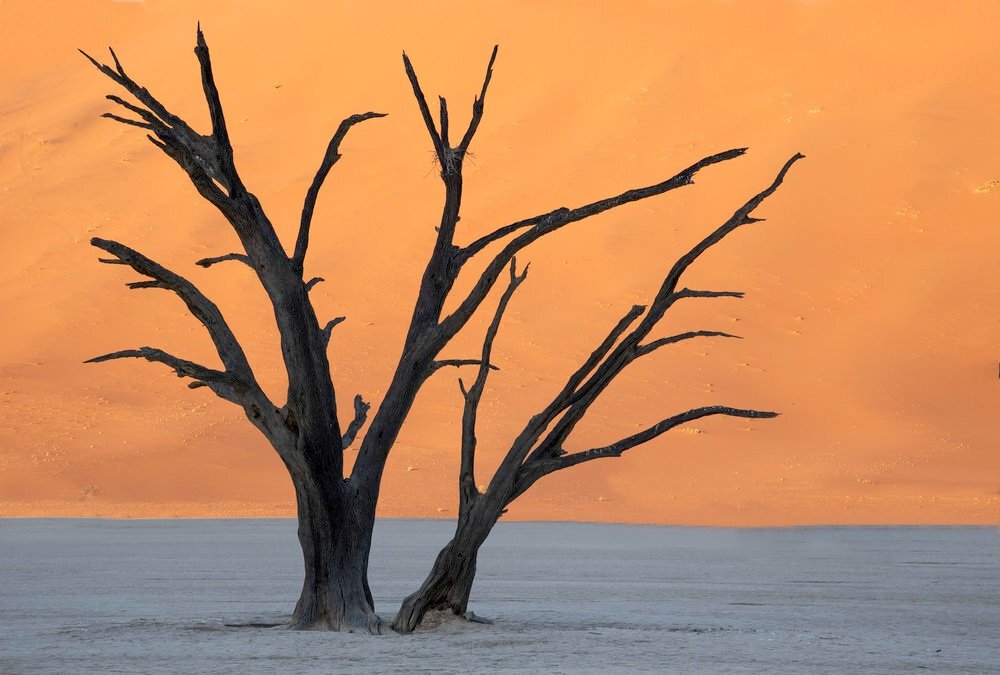
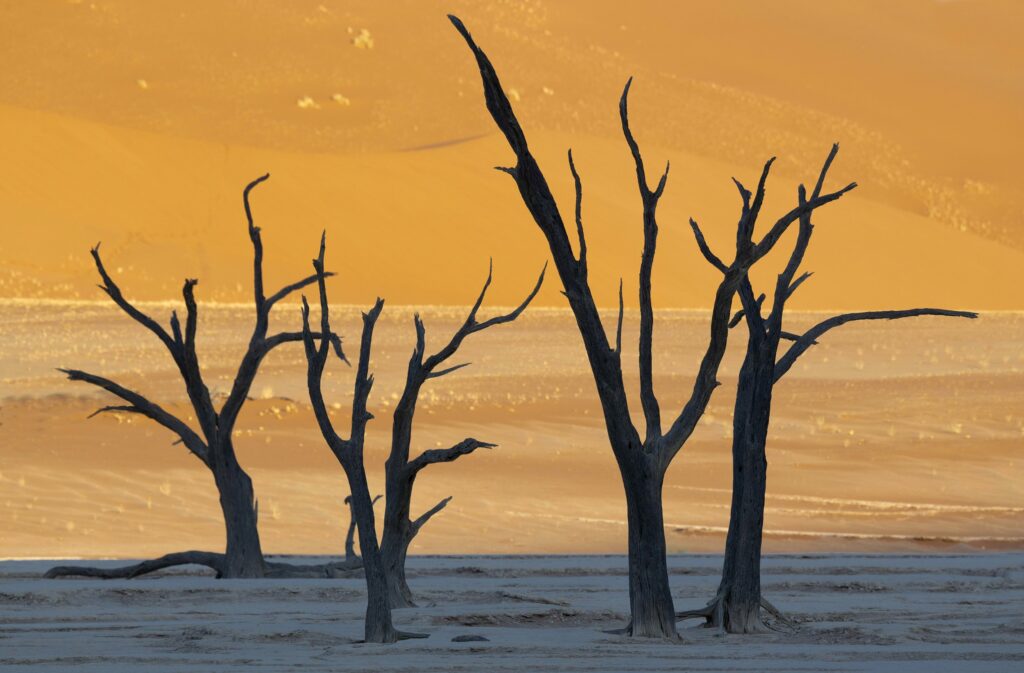
There are very few places on Earth where silence becomes a presence—it hums in your ears like a low frequency you never knew existed. ( I swear it feels like this before the sun rises) When you step into Deadvlei in Namibia, you’re stepping into another world. Surrounded by towering red sand dunes and standing amidst the skeletal silhouettes of 900-year-old trees, the sheer scale and beauty of the place get your creative juices flowing.
At Akari Photo Tours, we’ve returned to this extraordinary location multiple times across different seasons—and every visit offers something completely new. From the early morning light that paints the dunes in molten orange to the haunting stillness just before dusk, we know the rhythms of this place. Our small-group format means we can get you to the right place at the right time—without the crowds, without waiting for the tourists to exit your frame, without the rush, and always with hands-on, expert guidance.
Why Deadvlei in Namibia is a bucket-list destination for photographers
Dead Vlei lies deep within Namibia’s Namib-Naukluft National Park, which stretches nearly 50,000 square kilometers between Lüderitz and Walvis Bay. This is the heart of the oldest desert on Earth, where dunes—some reaching 300 meters high—glow red thanks to iron-rich sands oxidized by time. It’s an environment so visually dramatic that it almost defies belief. And for photographers? It’s pure gold… and, well, Diamonds. But we will discuss that in our article about Kolmanskop.
The Sossusvlei region, often called “Dune Alley,” is a corridor where the ancient Sossus River once flowed before being trapped by the rising dunes. From above, it looks like a white spear cutting through a crimson sea. Periodic rains breathe brief life into the vlei, but most of the year it remains a parched, cracked puzzle of clay—an iconic backdrop against the dark, dried trees and ever-shifting sands.
Getting there: The thrill before the still
Reaching Dead Vlei requires some effort—and that’s always part of the adventure in Namibia. A paved road leads from the Sesriem gate to a parking area at the base of the dunes, but from there, it’s either a sandy 4WD journey or a shuttle ride to the final stretch. And this is where traveling with Akari Photo Tours pays off. We know how to navigate the terrain—literally and creatively—so you don’t lose time (or get bogged down!) when the light is peaking. Our private safari vehicles will take us right to the entrance of the walking path that leads you to Deadvlei.
Our 4×4 vehicles get us where we need to go, and our guides are photographers, ensuring you’re always positioned for the best angles, compositions, and moments of light. The final approach to Dead Vlei is a one-kilometer walk through soft, undulating sand—a bit of a workout, but one we’ve done with photographers of all ages, from 20-somethings to folks in their 80s. We move at a photographer’s pace—slow, intentional, mindful of the scene unfolding around us.
Want to take things higher? The climb up Big Daddy, one of the tallest dunes in the world, offers an epic vantage point that’s worth the challenge. Trust us—standing atop a dune, wind whispering past your lens, looking down into Dead Vlei as the sun crests the horizon? That’s a shot—and a memory—you’ll never forget.

The advantage of early access
Timing is everything in photography, and Dead Vlei is no exception. The light transforms this place minute by minute. Accessing the park before sunrise is crucial to capture those glowing orange dunes and long, dramatic shadows across the clay pan. But here’s the catch: early access is only granted to those staying inside the park.
That’s where Akari Photo Tours comes in. We secure our accommodations well in advance at the few lodges and camps that allow early entry, giving our guests a solid head start on the wave of daily tourists. In fact, we have always arrived in time for that magical first light while others are still waiting at the gate.
And while night photography in Dead Vlei is no longer permitted due to overuse and abuse by some visitors, our carefully timed itineraries ensure we squeeze every last drop of low light from the day. We won’t dangle false promises of Milky Way shots over the vlei (those days are, unfortunately, long gone), but we will help you craft powerful dusk and dawn imagery that feels just as magical. Your iconic Milky Way shots will come in other spots. Those spots are in the Quiver Tree Forest, at an abandoned railway station I know of, and I will discuss that more in our article about Spitzkoppe.
Aerial perspectives: Helicopter photography over Deadvlei in Namibia
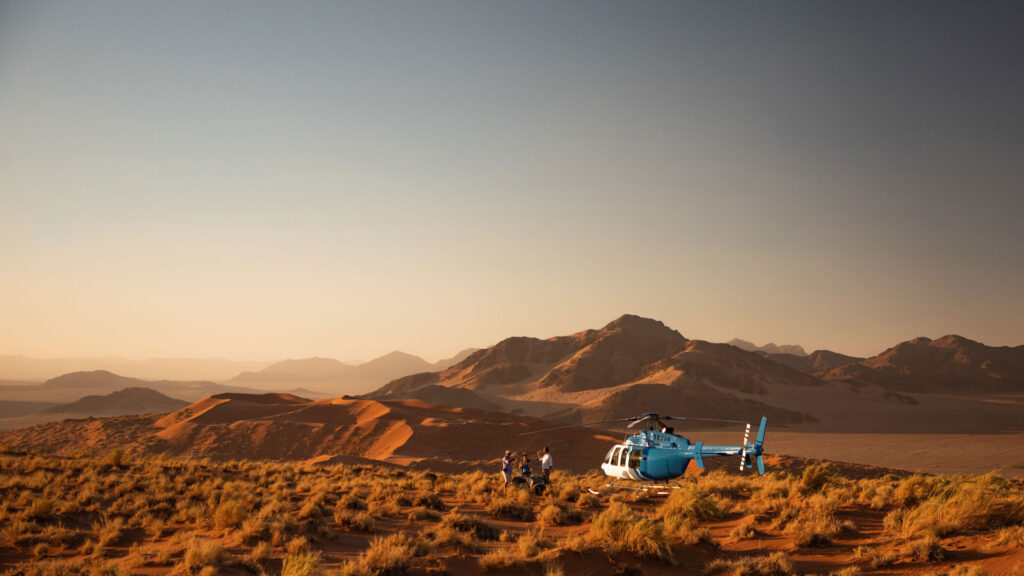
For those looking to take their photography to even greater heights—literally—Dead Vlei and the surrounding dunes can also be photographed from a helicopter. This is a phenomenal way to capture the full scale and grandeur of the Namib Desert. From above, the contrast between the white clay pan, the black trees, and the vibrant red dunes creates a graphic, almost abstract composition that’s impossible to replicate from the ground. Akari Photo Tours arranges helicopter flights with doors-off configurations specifically for photographers, allowing you to shoot unobstructed. We work with experienced pilots who understand light, angles, and timing—so you’re not just flying but flying with purpose. Whether chasing long shadows at sunrise or a golden glow at sunset, aerial photography over Dead Vlei is an unforgettable way to add a dramatic new perspective to your portfolio.
Where to stay: Insider knowledge makes the difference
If the few in-park lodges are booked (they fill fast), we also arrange camping options at Sesriem Camp, which still allows for earlier access than those staying outside park boundaries. With Akari, you don’t have to worry about logistics—we handle all of it so you can focus on your craft. From the right permits to insider tips on weather patterns, composition techniques, and post-processing, our tours are designed by photographers, for photographers.
What camera gear to pack for Deadvlei in Namibia
Packing the right gear for Dead Vlei can make all the difference. Because of the vast landscapes and intricate textures, you’ll want a well-rounded kit that allows you to shoot wide for sweeping scenes and tight for graphic, detail-rich shots. We recommend bringing a wide-angle lens (14–24mm or 16–35mm) for capturing the massive dunes and expansive skies, as well as a mid-range zoom (24–70mm) to frame compositions of the trees with the surrounding landscape. A telephoto lens (70–200mm or more) helps isolate trees against the dunes or play with compression. Don’t forget a sturdy tripod for low-light scenes at dawn and dusk, and a circular polarizer to deepen skies and manage reflections off the sand. At Akari Photo Tours, we also provide daily image reviews and on-location coaching to help you make the most of your gear—whether you’re shooting with a DSLR, mirrorless system, or even a high-end compact camera.
Capturing the iconic—and the unexpected
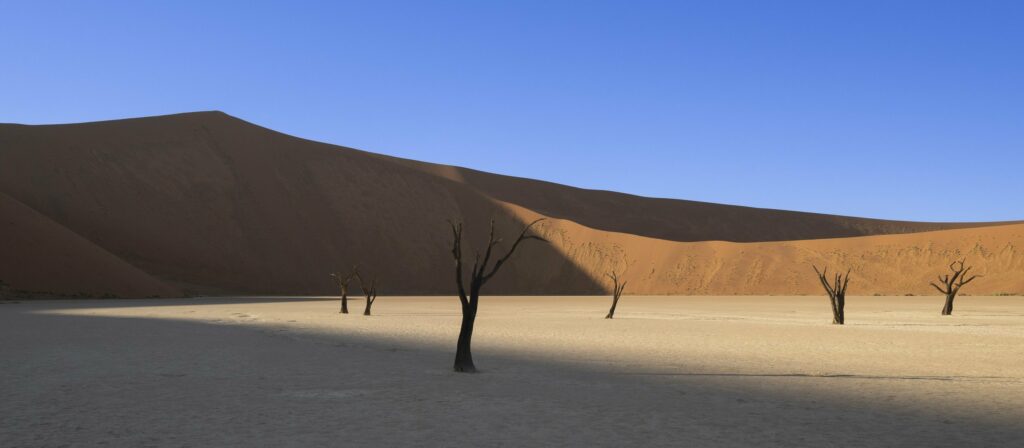
And finally, there it is—the dream—Dead Vlei in all its silent, surreal beauty. A skeletal forest of camelthorn trees—lifeless yet standing—framed by dunes that burn red in the sun and clay earth that looks like it cracked apart under some ancient spell. Each tree has a character, a presence. Some, like “The Ballerina,” seem to float mid-dance, paused in a centuries-long pirouette.
Photographers Frans Lanting and Michael Poliza introduced Deadvlei in Namibia to the world, capturing its eerie magic in international publications like National Geographic. Their early work turned this quiet corner of the Namib into a pilgrimage site for landscape and fine art photographers. While countless images now exist of these trees against that sky, every visit holds a new possibility—a new shadow, a new curve in the sand, a new moment.
That’s the beauty of photographing with Akari Photo Tours. We return time and again because no two visits are ever alike. Our small groups allow flexibility, creative exploration, and one-on-one instruction. Whether you’re new to photography or a seasoned pro, we help you push past the postcard shot and dive into your artistic voice.
So if you ever find yourself standing alone in Dead Vlei—first to arrive, last to leave—listen. Let the silence wrap around you. Let your shutter click into that stillness. And know that, in that quiet, your story is being written in light.
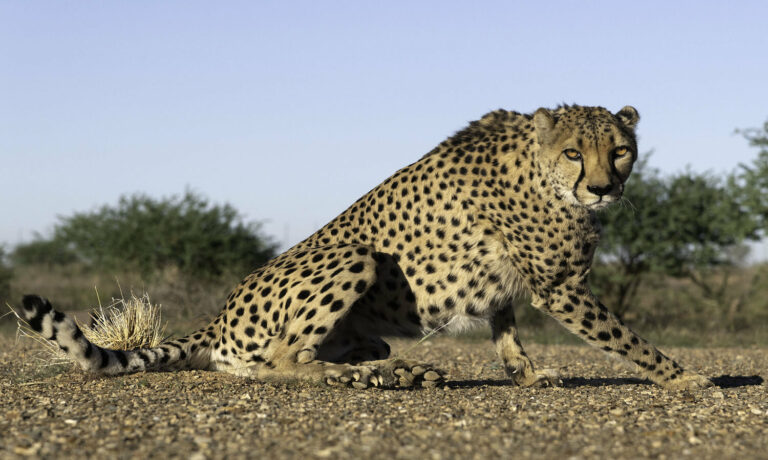
If you want to understand why Namibia is one of our favorite places on Earth, check out our articles on some of its most iconic locations—Spitzkoppe, often called the Matterhorn of Africa, the hauntingly beautiful ghost town of Kolmanskop, the Himba people, the Quiver Tree forest, and the fantastic wildlife.
Each one offers a unique story and a reason to pick up your camera and join one of our Namibia Photo Tours.