Through red ochre and smoke: Photographing the Himba people
By Kevin Pepper |
Who are the Himba people?
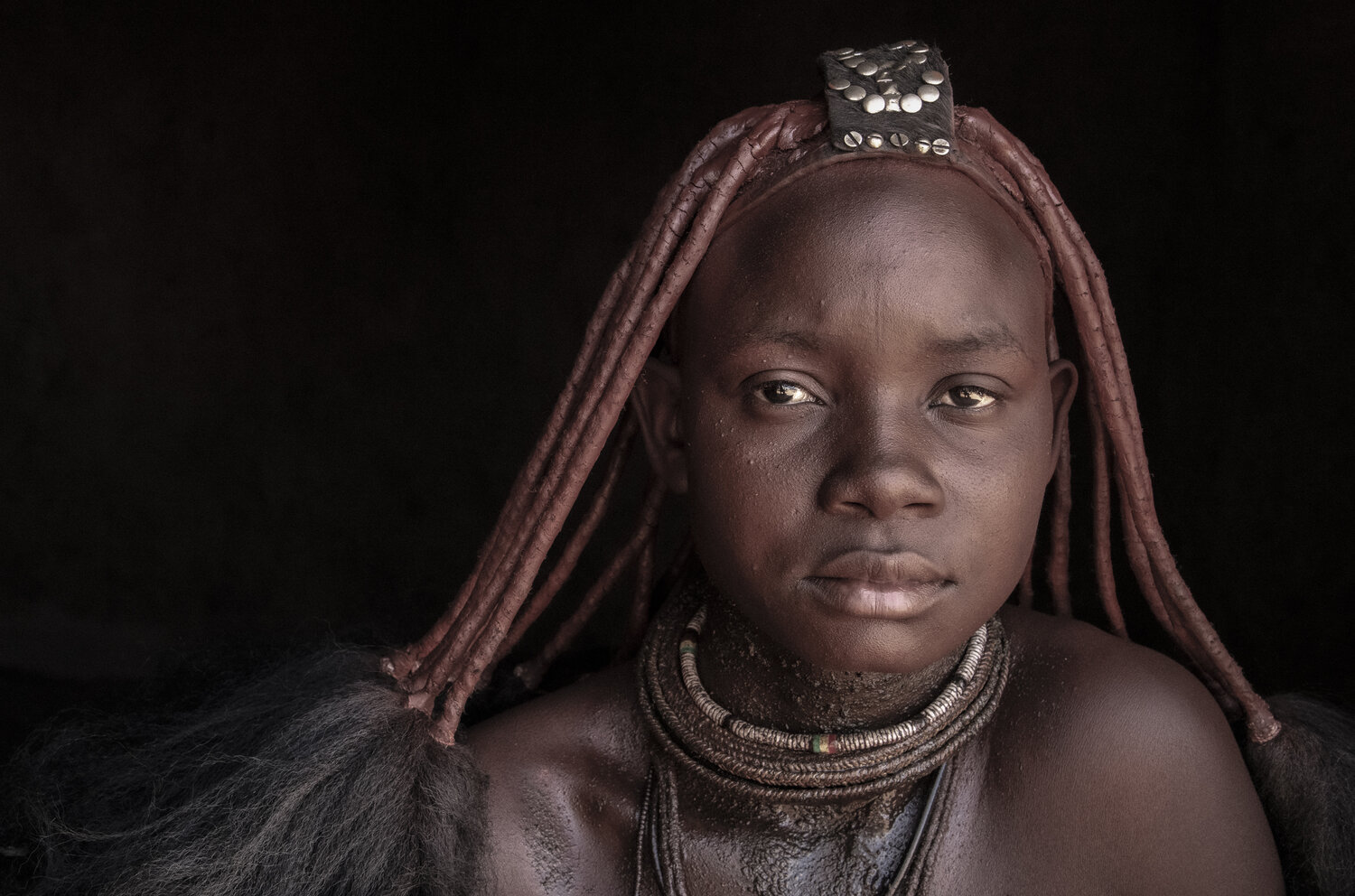
The Himba people of Namibia are one of the last genuinely semi-nomadic tribes in Africa, living in Namibia’s remote northwest, mainly in the Kunene region. Known for their red ochre-covered skin, intricate hairstyles, and traditional clothing, the Himba maintain a culture that reflects the rhythms of a life deeply tied to the land. Their cattle are their currency, their heritage, and their lifeline. Despite the modern world creeping ever closer, the Himba continue to live much as their ancestors did—a way of life that deserves admiration and respect.
Where did the Himba People migrate from?
The Himba are descendants of the Herero people, who migrated south from central Africa centuries ago. In the 16th and 17th centuries, they moved into present-day Angola and northern Namibia. After conflicts and natural disasters split the community, one group adopted a more nomadic lifestyle and became known as the Himba. Over time, they adapted to the rugged terrain of Kaokoland, developing customs uniquely suited to this dry and demanding environment.
How can a photographer find a village to photograph them?
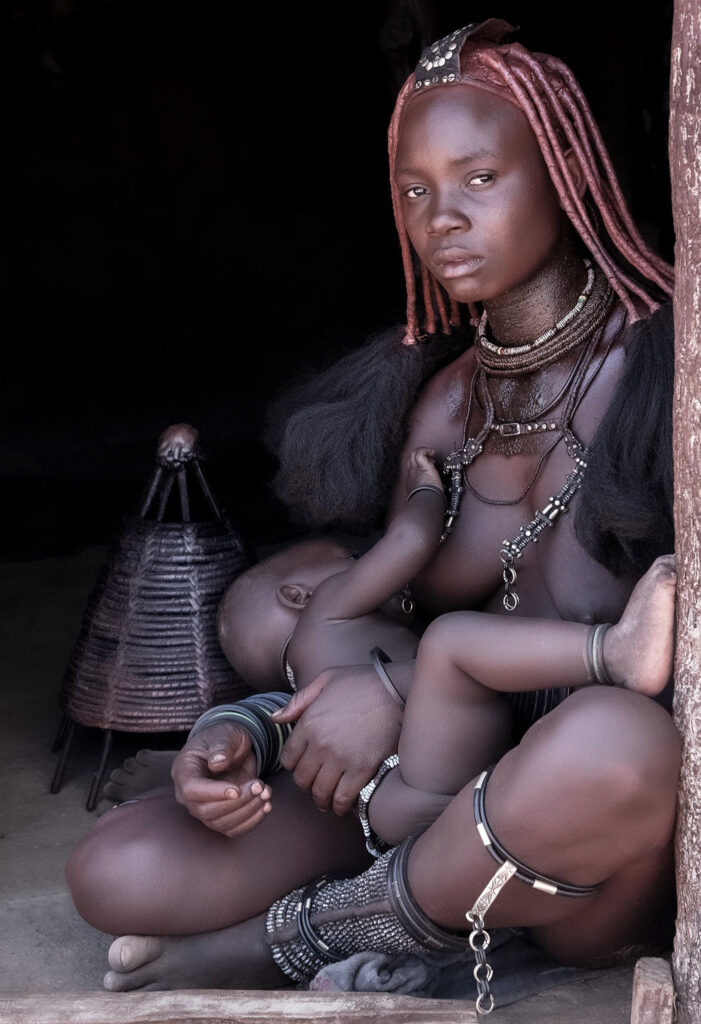
Photographing the Himba isn’t something you stumble into. The best way is through trusted local guides with longstanding relationships with Himba families. In my workshops, we work only with communities that invite us in and ensure our visits are mutually beneficial. If you’re traveling solo, look for ethical tour operators based in towns like Opuwo or Epupa Falls—people who understand this isn’t a photo op but a cultural exchange.
Steer clear of tours that promise “quick Himba village stops” or those that parade the people for tourists. Instead, find guides willing to be transparent about where the money goes, how introductions are made, and whether the villagers are comfortable being photographed.
How do you photograph a nomadic tribe?
Photographing a nomadic tribe isn’t about pointing your lens and pressing the shutter. It’s about patience, observation, and genuine human connection. Spend time without your camera. Learn a few basic greetings. Watch the rhythm of the village—the way people move, the pace of the day.
Avoid staging. Let real life guide your lens. Whether it’s a mother preparing ochre, children playing in the dust, or elders sitting quietly in the shade, your best images will come from moments of authenticity. Show respect, and you’ll be welcomed into stories most people never see.
What is the red ochre they wear, and what is a smoke bath?
The Himba’s signature red appearance comes from otjize, a mixture of butterfat and red ochre stone that they apply daily to their skin and hair. It protects against the sun, repels insects, and carries deep cultural significance—symbolizing earth, blood, and life. It’s also a reflection of beauty and status.
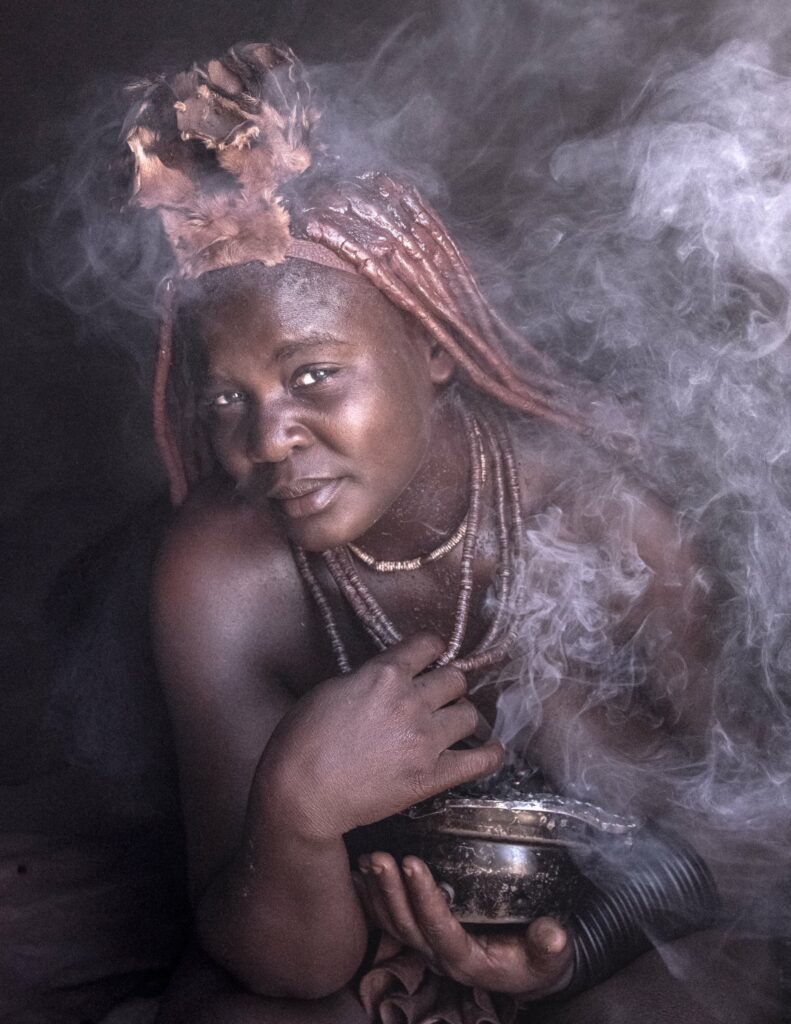
In a land where water is scarce, the Himba women take smoke baths. Aromatic herbs and wood are burned in clay pots, and the smoke is used to cleanse the body and clothes. It’s an intimate, meditative process—a ritual that speaks to their resourcefulness and respect for the land.
My best tips for photographing the Himba People
Tips on Natural Lighting
- Early and late are golden—use the soft light to bring warmth and dimension to skin tones and textures.
- Backlight dust and smoke for atmosphere. Those particles in the air catch light beautifully.
- Shade is your friend—especially when photographing under the harsh midday sun. Look for soft, reflected light near huts or under trees.
Tips on connecting with the subjects
- Put the camera down first. Spend time just being there.
- Ask questions through a translator. Genuine curiosity builds trust.
- Bring prints back if you plan to return—it shows you value the relationship, not just the image.

Tips on environmental portraits
- Frame wide and tight—tell both the personal and the contextual story.
- Use elements of the village—huts, smoke, livestock, handmade tools—these give your photos narrative power.
- Look for repetition in jewelry, clothing, or tools to add visual rhythm to your image.
Tips on creating emotion in your photos
- Wait for the quiet moments—a glance, a pause, a shared look.
- Be invisible, but present. Blend into the scene, but don’t hide.
- Avoid over-directing. Authentic emotion doesn’t respond to “say cheese.”
Tips on creating a connection with the subject
- Photograph at eye level—meet them as equals.
- Use open body language. Smile, nod, and show your images on the back of your camera (with permission).
- Spend time. Connection takes time, and your best photos come from that investment.
Focus on the eyes
- Eyes tell the truth. If you capture the soul in a glance, you’ve done your job.
- Use shallow depth of field to isolate the face and bring intensity to the gaze.
- Don’t be afraid of close-ups—but only once trust is earned.
How we teach this on our workshops
- ✅ I’ve spent over a decade photographing indigenous cultures in Mongolia and Africa. I bring this lived experience into the field with every group.
- ✅ You’ll learn to read and use natural light, from harsh midday sun to soft ambient shade inside huts.
- ✅ We build relationships with communities long before the camera comes out. I teach you to create a connection with the people we are photographing.
- ✅ Small group sizes mean hands-on guidance. I work closely with each participant to develop their storytelling, composition, and cultural sensitivity skills.
- ✅ We talk about ethics, not just exposure settings. How you photograph people matters as much as what you photograph.
- ✅ Image review sessions help you grow fast. We critique constructively, push boundaries, and refine your visual voice.
- ✅ We return to villages with respect. And often, with printed images, a gesture that always goes further than words.

Cultural etiquette: A few quick do’s and dont’s
- Do ask before photographing. Always.
- Do bring small, meaningful gifts (with your guide’s advice).
- Don’t touch personal items or structures without permission.
- Don’t take photos of sacred rituals or private spaces unless explicitly allowed.
Gear tips
- Best lenses: 24–70mm for environmental portraits, 85mm or 135mm for tighter frames, and a 35mm prime for intimate storytelling.
- Settings: Use wide apertures for shallow depth of field, but stop down when including environmental details.
- Low light inside huts: Raise ISO, use fast lenses, and stabilize your shot with a monopod or steady hand. Avoid flash unless necessary—and even then, only with consent.
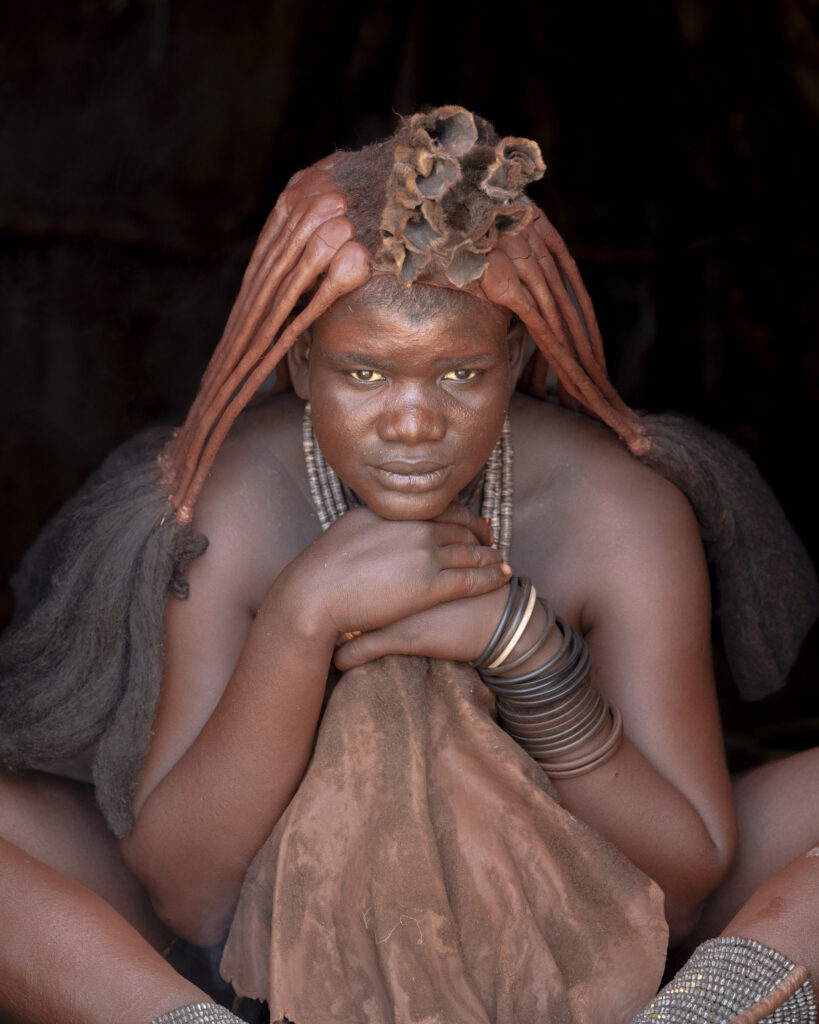
The power of a print
One of the most potent ways to build connection and trust is to bring printed photos back to the people you’ve photographed. It transforms the exchange into something meaningful and lasting. In many communities, these prints become treasured family items—something far beyond the digital moment we often take for granted. Usually, we don’t pass by the same village twice on the same trip, but my local guides and I return… and that’s when we will take your printed images with us.
If you want to dive deeper into why Namibia is one of our favorite places on Earth, check out our articles on some of its most iconic locations—Spitzkoppe, often called the Matterhorn of Africa, the hauntingly beautiful ghost town of Kolmanskop, the rich wildlife that roams its vast landscapes, the Quiver Tree forest, and the surreal beauty of Deadvlei and Sossusvlei. Each one offers a unique story and a reason to pick up your camera and join one of our Namibia Photo Tours.