Spitzkoppe: Namibia’s hidden gem for landscape and astrophotographers
By Kevin Pepper |
Rising dramatically from the Namib Desert like the back of a slumbering dragon, Spitzkoppe is one of Namibia’s most iconic and photogenic natural wonders. Often referred to as the “Matterhorn of Africa,” this jagged granite peak and its surrounding formations have become a favorite subject for photographers who crave dramatic landscapes, surreal rock formations, and night skies that rival anywhere else on Earth.
Where is Spitzkoppe?
Spitzkoppe is located in the Erongo region of central-western Namibia, roughly halfway between the coastal town of Swakopmund and the inland city of Usakos. Though it feels remote (and it is), the area is easily accessible by road and makes for an unforgettable stop on any photographic tour through Namibia.
This collection of granite peaks, the tallest of which rises about 1,728 meters (5,669 feet) above sea level, is the eroded remnant of a 700-million-year-old volcano. The surrounding desert plain makes the peaks stand out even more, giving photographers uninterrupted views and the perfect opportunity to play with scale and light.
Where To Stay When You Visit Spitzkoppe
When visiting the iconic Spitzkoppe in Namibia, you have several accommodation options to suit different preferences:
Spitzkoppe Campsite: For a rustic experience, the community-run Spitzkoppe Campsite offers sites nestled among the granite boulders. Each site features a braai (barbecue) area and a long-drop toilet, with hot showers available near the reception area. This setup allows you to immerse yourself in nature while enjoying basic amenities.
Spitzkoppe Mountain Tented Camp: Located approximately 500 meters outside the Spitzkoppe Mountain Reserve, this camp provides rustic bush tents equipped with private bathrooms, electricity, and braai areas. It’s an excellent choice for those seeking a balance between comfort and proximity to nature.
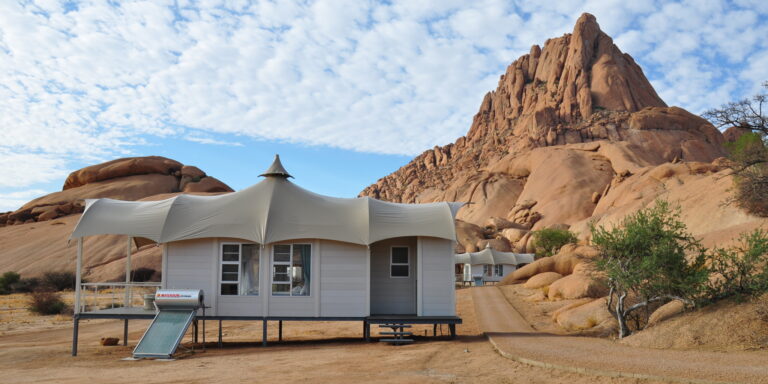
Spitzkoppen Lodge (my choice): For a more luxurious stay, Spitzkoppen Lodge offers 15 tastefully furnished chalets, each with a private bathroom and covered outdoor viewing deck. The lodge features a dining area, bar, lounge, and a pool with panoramic views of the surrounding landscape. This option caters to those looking for comfort amidst the rugged beauty of Spitzkoppe. This is where we always stay when we visit this location.
Each of these accommodations provides a unique way to experience the breathtaking scenery and rich cultural heritage of Spitzkoppe.
Why photographers love Spitzkoppe
1. Iconic rock formations and arches
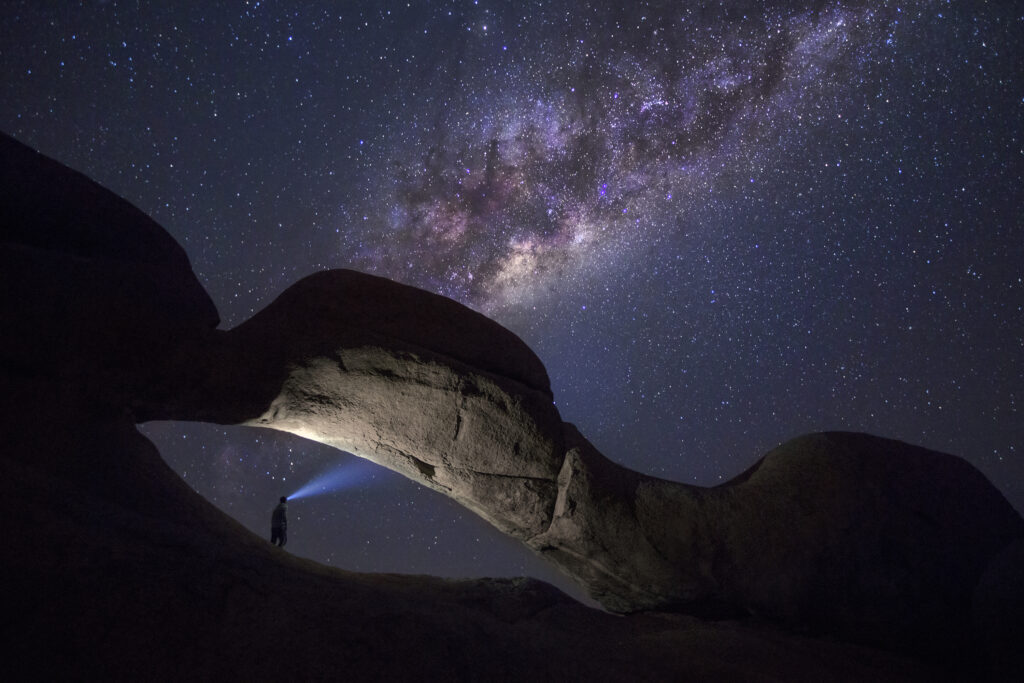
Most photographers’ standout feature is the natural rock arch, which perfectly frames the distant peak of Spitzkoppe—especially during golden hour or under the starry sky. The combination of smooth granite curves, deep shadows, and warm tones gives photographers diverse compositions.
2. Astrophotography paradise
Spitzkoppe is miles from any major city, which means the night skies are blissfully dark. The Milky Way arches overhead with staggering clarity, making this one of Namibia’s premier astrophotography spots. Imagine composing a shot with the rock arch in the foreground and a sky full of stars behind it—unforgettable!
3. Golden light and textures
The desert light in Spitzkoppe is pure magic. Sunrise and sunset bathe the granite in warm orange and red hues, creating rich textures and deep shadows. Long lens or wide-angle—there’s no wrong choice here. The rock formations seem to change personality with each shift in light.
4. Minimalist desert aesthetic
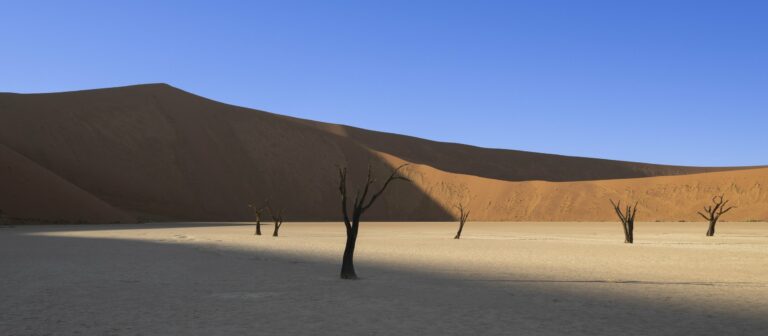
The surrounding flat desert terrain offers a perfect canvas for minimalist landscape compositions. Isolated trees, patterns in the sand, and distant silhouettes of peaks make for quiet, striking images that tell stories of solitude and scale.
5. Cultural significance
Spitzkoppe is also home to ancient San Bushman rock paintings tucked into hidden caves—fascinating subject matter for photographers interested in cultural and historical elements. These delicate artworks offer a glimpse into the lives of the area’s earliest inhabitants.
6. Desert-adapted wildlife
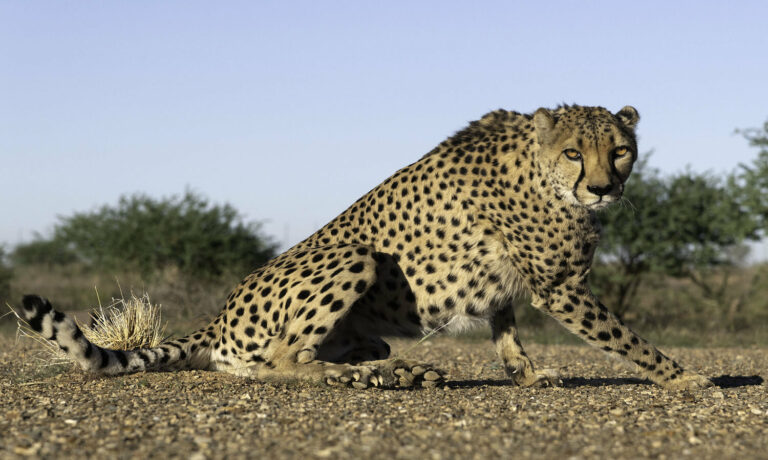
While Spitzkoppe is more renowned for its landscapes, photographers may also encounter wildlife such as rock hyraxes, agamas, and various desert-adapted birds like rosy-faced lovebirds and raptors soaring above the granite peaks.
Camera gear you should take to Spitzkoppe
Photographing Spitzkoppe, often called the “Matterhorn of Namibia,” requires a kit that can handle dramatic landscapes, astrophotography, and intimate detail shots. A wide-angle lens (14–24mm or 16–35mm) is essential for capturing the granite peaks, rock arches, and sweeping desert vistas—especially during golden hour and under the stars. A mid-range zoom (24–70mm) is excellent for isolating rock formations and adding depth to your compositions. For capturing the stars and Milky Way over the iconic arch, a sturdy tripod, remote shutter release, and a camera with excellent high ISO performance are key. A headlamp with a red light helps you navigate in the dark without ruining your night vision. Finally, bring extra batteries—they drain quickly during long exposures, especially in cooler nighttime conditions.
Whether you’re chasing golden light, hunting stars, or seeking silence in a place that feels otherworldly, Spitzkoppe delivers. It’s not just a location—it’s an experience. And for photographers, it’s a canvas that begs to be explored, one frame at a time.
Don’t waste your time fumbling around and looking for the best compositions on your first visit. Join one of our workshops in Namibia. We always spend a night here and know just where to take you to get the best photos.
If you want to dive deeper into why Namibia is one of our favorite places on Earth, check out our articles on some of its most iconic locations – Deadvlei, the hauntingly beautiful ghost town of Kolmanskop, the Himba people, the Quiver Tree forest, and the fantastic wildlife.