Exploring the ghost town of Kolmanskop in Namibia
By Kevin Pepper |
Nestled in the heart of the Namib Desert, Kolmanskop is a ghost town steeped in history and mystery. Once a thriving diamond mining town, it now stands as a hauntingly beautiful testament to human ambition and the relentless march of time. For photographers, Kolmanskop offers an extraordinary blend of decay and elegance, making it one of the most sought-after locations in the world for capturing the essence of desolation and beauty. Let’s delve into the history of Kolmanskop, explore why it is a popular photography spot, and discuss the best techniques and times to visit.

The history of Kolmanskop
Kolmanskop was established in 1908 following the discovery of diamonds in the surrounding area. The town quickly transformed from a barren desert settlement to a bustling activity center. With grand houses, a hospital, a ballroom, and even a bowling alley, Kolmanskop symbolized wealth and prosperity. The town’s inhabitants enjoyed a high standard of living, with luxury items and unparalleled modern amenities in the region.
However, the town’s fortunes declined in the 1920s when diamond fields were discovered in richer deposits elsewhere. The last residents left Kolmanskop in 1954, and the town was gradually abandoned. Nature swiftly reclaimed the town, with sand dunes encroaching upon the buildings, creating a surreal and otherworldly landscape.
Why Kolmanskop is a photographer’s dream
Kolmanskop’s eerie beauty and architectural decay make it a magnet for photographers. Here’s why it’s so appealing:
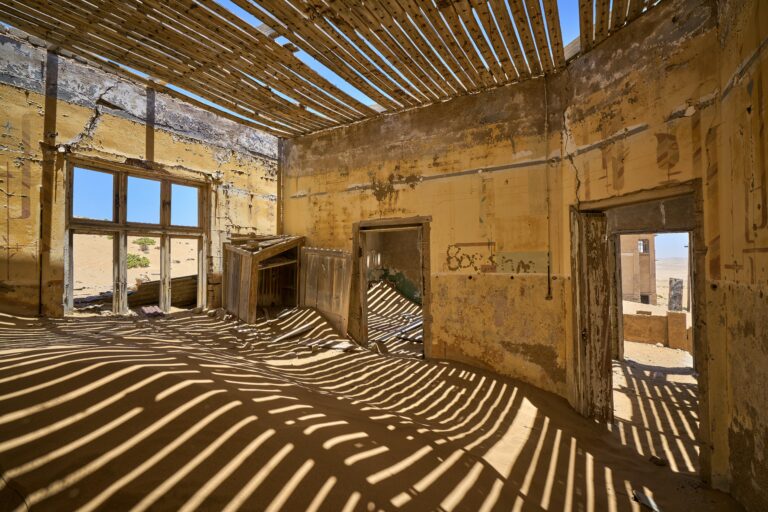
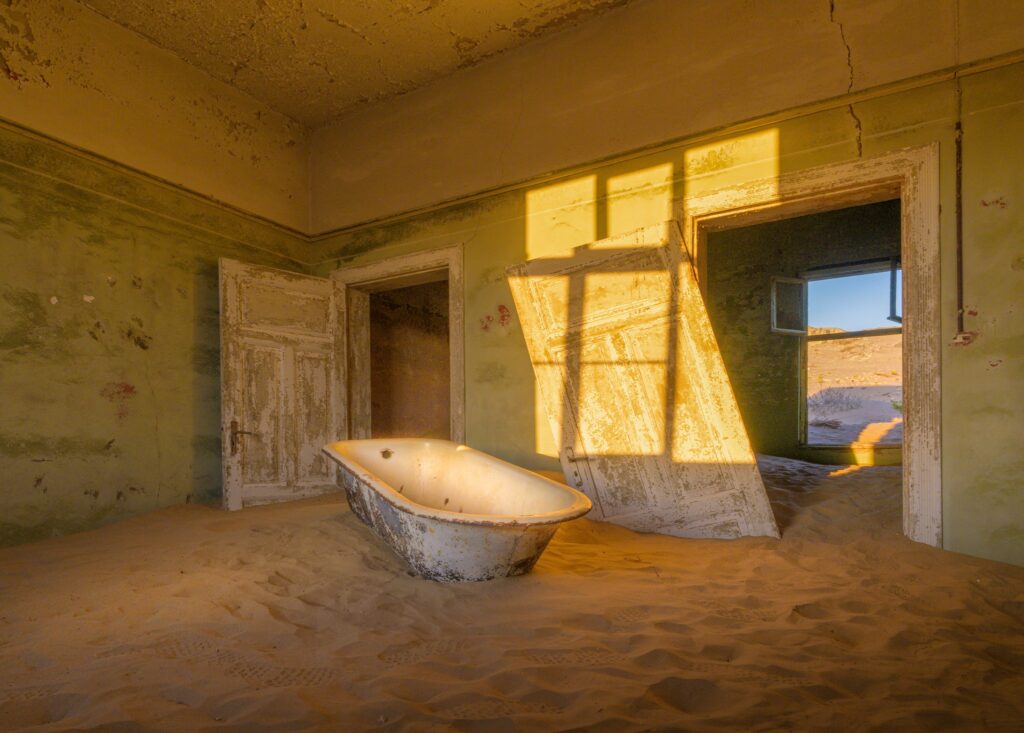
- Stunning decay: The once-grand buildings, now in various stages of disrepair, offer a dramatic contrast to the pristine desert surroundings. Broken windows, rusted machinery, and sand-filled rooms create compelling scenes of decay.
- Unique light conditions: The harsh desert light, combined with the soft glow of sunrise and sunset, casts long shadows and enhances the texture of the sand and decay, offering photographers a dynamic range of lighting conditions.
- Atmospheric appeal: The blend of sand dunes inside the buildings, the eerie silence, and the desolate ambiance provide a hauntingly beautiful setting perfect for capturing the essence of abandonment and nostalgia.

Camera Gear to Take to Kolmanskop
When photographing Kolmanskop, the ghost town swallowed by Namibia’s desert sands, it’s best to bring a versatile kit. A wide-angle lens (14–24mm or 16–35mm) is essential for capturing the dramatic interiors and sweeping, sand-filled hallways. A mid-range zoom (24–70mm) works well for detail shots of peeling paint, weathered textures, and sunbeams streaming through broken windows. A tripod is a must for low-light scenes inside buildings, especially during early morning or late afternoon when the light is soft and dramatic. Don’t forget a dust blower and lens cloths—sand gets everywhere! And if you enjoy fine art or abstract photography, consider a macro lens to capture the haunting beauty of decay up close.
When Should You Visit Kolmanskop
Photographing Kolmanskop isn’t a one-and-done experience—this abandoned diamond town transforms with the light. In the early morning, soft side lighting adds texture and depth to sand-filled rooms, while the low-angle sun casts dramatic shadows through doorways and broken windows. Midday light bounces off pale walls, revealing hidden details and creating a surreal, almost dreamlike quality. As the sun drops, warm tones sweep in, bathing the interiors in gold and deepening the contrast between decay and desert. Each visit gives you a new palette, a new mood, and a new story to tell through your lens.
My favorite times to photograph Kolmanskop are in the late afternoon and early evening. As the sun begins to lower, it shines more directly overhead, casting striking shadows through broken ceilings and open doors, creating layers of light and texture that weren’t there earlier in the day. The wind often picks up in the late afternoon, stirring the sand and lifting it into the air. That drifting dust catches the sunlight and gives the rooms a hazy, ethereal quality—almost like the ghosts of the past are moving through the buildings. It’s haunting, beautiful, and unforgettable.
Best Time of Year to Visit Kolmanskop
May through September is the preferred time to visit Kolmanskop. These are the cooler, drier months in Namibia’s winter, which means clear skies, softer light, and less heat shimmer in your images. Mornings and evenings are more comfortable for exploring and shooting, and the lower sun angle creates long shadows and beautiful textures on the sand and walls. Wind is also more common in the afternoons during these months, which helps kick up that atmospheric dust that adds mood and drama to your photos.
Photographic techniques for Kolmanskop
Photographers visiting Kolmanskop employ a variety of techniques to capture its haunting beauty. Here are some essential methods:
- Long Exposure Photography: The stillness of the environment, coupled with the play of light and shadows, makes Kolmanskop ideal for long-exposure shots. This technique can blur any movement of sand or create ethereal light trails, adding to the ghostly atmosphere.
- HDR imaging: High-dynamic-range (HDR) photography is effective in Kolmanskop, where the contrast between the bright desert light and the shadowy interiors can be extreme. HDR imaging helps capture a wide range of luminance levels, ensuring that details in both the shadows and highlights are preserved.
- Wide-angle lenses: Kolmanskop’s expansive interiors are perfect for wide-angle photography. These lenses allow you to capture the grandeur of the rooms and the vastness of the desolate spaces, emphasizing the town’s scale and isolation.
- Macro Photography: Don’t overlook the small details. The textures of sand patterns, weathered surfaces, and intricate decay provide rich material for macro photography, revealing the finer aspects of Kolmanskop’s desolation.
- Black and white: The monochromatic tones of black and white photography can enhance the mood of Kolmanskop, emphasizing contrasts, shapes, and textures without the distraction of color. This technique is particularly effective in capturing the timeless essence of the ghost town.
Hydration and Food While Visiting Kolmanskop
Exploring Kolmanskop under the intense Namibian sun requires mindful hydration. It’s essential to bring ample water to stay hydrated during your visit. While the on-site curio and coffee shop offers beverages and snacks, it’s advisable to carry your own supply to ensure you have enough during your exploration.
For more substantial meals, consider visiting Lüderitz, located about 10 kilometers from Kolmanskop. This coastal town boasts several dining options, including The Portuguese Fisherman, Barrels – Restaurant and Bar, and Diaz Coffee Shop – Oyster & Wine Bar – Beergarden. These establishments offer a variety of cuisines to satisfy your appetite after a day of photography and exploration.
Nestled within the historic Casino Building of Kolmanskop, the Ghost Town Tavern offers visitors a unique opportunity to relax and refresh amidst the echoes of a bygone era. The last time I checked, it was open from 8:00 AM to 1:00 PM, Monday through Saturday. The café serves a selection of freshly baked cakes and savory treats, perfectly complemented by expertly brewed cappuccinos and Americanos. The ambiance is enriched by antique décor and relics from the town’s diamond mining heyday, allowing guests to immerse themselves in the past while enjoying their meals. Adjacent to the café, the Souvenir Shop presents a curated array of décor items and gifts, providing a chance to take a piece of Kolmanskop’s history home.
Conclusion
Kolmanskop is more than just a deserted town; it’s a living canvas for photographers. Its blend of history, decay, and desert beauty offers endless opportunities for creative expression. Whether you’re a seasoned professional or an enthusiastic amateur, Kolmanskop’s unique charm will inspire and challenge your photography skills. So pack your gear, prepare your techniques, and venture into the heart of the Namib Desert to capture the haunting beauty of Kolmanskop. Your next great photograph awaits in the sands of time.
You can always join us for a photography workshop in Namibia. Let us worry about the logistics and getting you to the best places to photograph at the best time of year. We have been there numerous times and would love to show you all the little gems of this town. Learn more about our Namibia photo tours.
If you want to dive deeper into why Namibia is one of our favorite places on Earth, check out our articles on some of its most iconic locations—Spitzkoppe, often called the Matterhorn of Africa, the hauntingly beautiful Deadvlei, the Himba people, the Quiver Tree forest, and the fantastic wildlife.