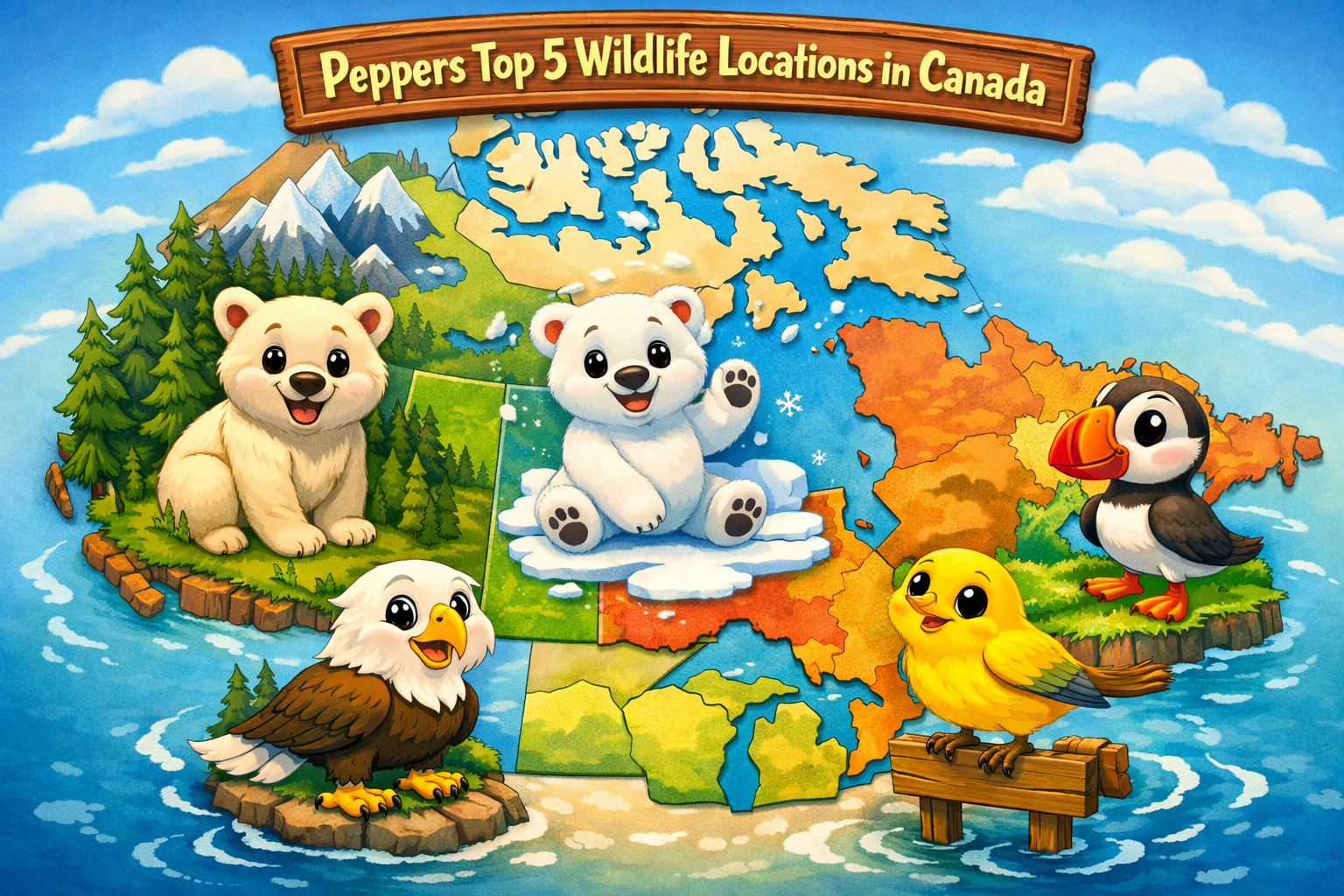
My Top 5 Wildlife Photography Destinations in Canada
By Kevin Pepper |
I have been lucky to travel the world in search of great wildlife experiences with a camera in hand. From the penguin colonies of South Georgia to the plains of Africa, the wild corners of South America, the mountains and steppes of Asia, and the rich habitats of Europe, I have photographed wildlife in some extraordinary places. Every destination has its own character, its own rhythm, and its own rewards. But nothing compares to what I would consider the best wildlife photography destinations in Canada
Canada is one of the best countries on earth for wildlife photography. We have wild coastlines, vast forests, Arctic tundra, migration hotspots, and an incredible range of species spread across landscapes that still feel truly untamed. It is a country that continues to surprise me, even after years of photographing wildlife around the globe. And perhaps that should not surprise me at all. Sometimes the places that move us most are the ones that feel closest to who we are.
I have been fortunate to photograph wildlife in many remarkable places across Canada. If I had to narrow it down to my personal top five wildlife photography destinations close to home, this would be the list. These are the places that stay with you. The places where the light feels different, the wildlife feels truly wild, and the experience of being there becomes just as memorable as the images you bring home.
This list is shaped by what matters most to photographers: strong wildlife opportunities, the right season, realistic access, and the kind of setting that makes you want to get out of bed before sunrise, even when common sense and a warm bed are making a very convincing argument to stay put.
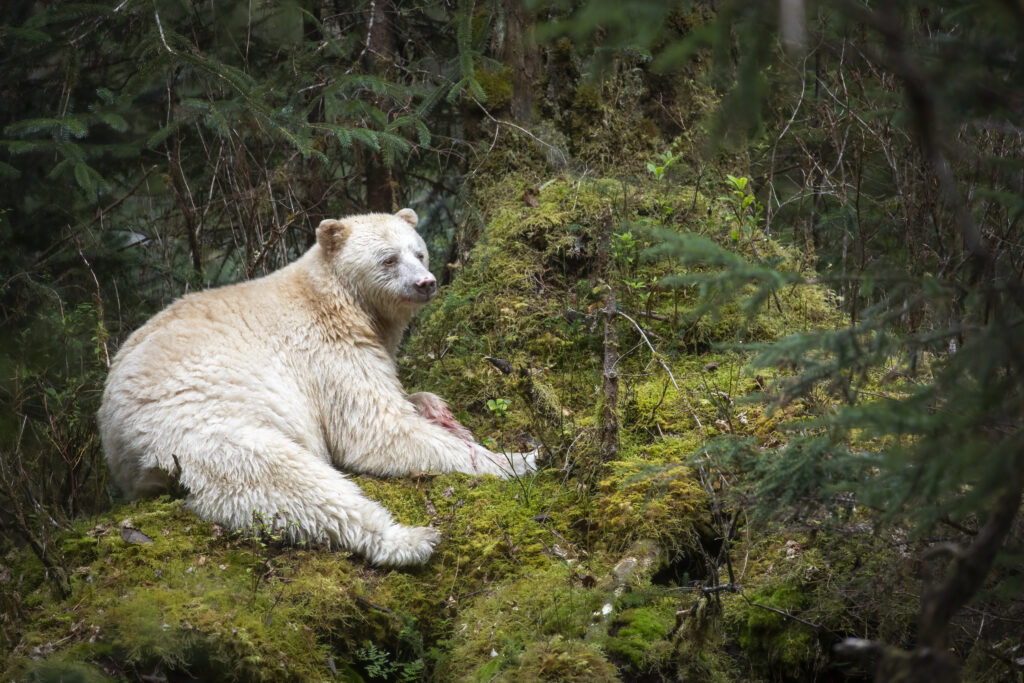
1. Great Bear Rainforest, British Columbia
If I had to choose one wildlife destination in Canada that feels the most wild, the most haunting, and the most unforgettable, it would be the Great Bear Rainforest. This is one of those places where the atmosphere gets to you before the wildlife even shows up. Mist hanging over the water. Ancient forest right down to the shoreline. Quiet estuaries. Salmon streams. The sense that something important could step out of the trees at any moment.
This part of British Columbia is also deeply tied to Indigenous stewardship, especially within the traditional territory of the Kitasoo Xai’xais First Nation, and that is part of what gives the place its depth and meaning.
Best time of year to go and why
For photographers, I love this destination in two different windows.
In June, the coast feels fresh and alive. The estuaries are green, the days are long, and the season has a different energy from fall. Spirit Bear Lodge notes that spring can bring less rain, longer days, and strong wildlife opportunities.
Then, in late summer and fall, the season shifts. The salmon are running, the rainforest becomes moodier, and bear photography becomes the headline act. Spirit Bear Lodge notes that wildlife sightings vary throughout the whole season, but weather tends to bring less sun and more rain as the season progresses. For photographers, that softer, wetter atmosphere can be part of the magic.
What kind of weather to expect
In June, expect cool mornings, fresh air, and changeable coastal conditions. In fall, expect more moisture, more overcast skies, and more rain. This is coastal British Columbia doing what coastal British Columbia does best: keeping everything lush and keeping photographers honest. A bright forecast can turn soft and moody in a hurry, which is not always bad news for your images.
Wildlife species you can photograph
This is one of the best places in Canada to photograph coastal wolves, black bears, spirit bears, grizzly bears, bald eagles, ravens, marine birds, and, depending on location and timing, whales and other coastal wildlife. Our daily wildlife viewing is always shaped by recent sightings, tides, and weather, which is exactly how truly wild places should be.
Suggested camera gear and accessories
For the Great Bear Rainforest, I would suggest:
- A 100-400mm, 180-600mm, or 200-500mm type wildlife lens
- A second body with a 24-70mm or 70-200mm
- A wide-angle lens for boat scenes, landscapes, and environmental images
- A rain cover for the camera and lens
- A dry bag
- Extra batteries and memory cards
- A monopod or easy-to-manage support
- Several microfiber cloths, because the rainforest did not get its name by accident
Why I love this destination
I love the Great Bear Rainforest because it still feels like a place that has not been overly polished for visitors. It still feels real. The wildlife does not perform on command. The weather changes. The conditions change. You have to pay attention. You have to stay ready. When it all comes together, the images feel earned.
It is also one of those places that quietly resets you. You go there for bears and wolves, but you come home remembering the sound of the water, the smell of the forest, and the feeling of sitting in a boat waiting for the next moment to happen.
We offer a few different workshops in the Great Bear Rainforest. You can see those workshops on our Canadian Photography Workshop page. If you want to photograph one of the wildest and most unforgettable wildlife destinations in Canada, this is one I would strongly encourage you to consider.
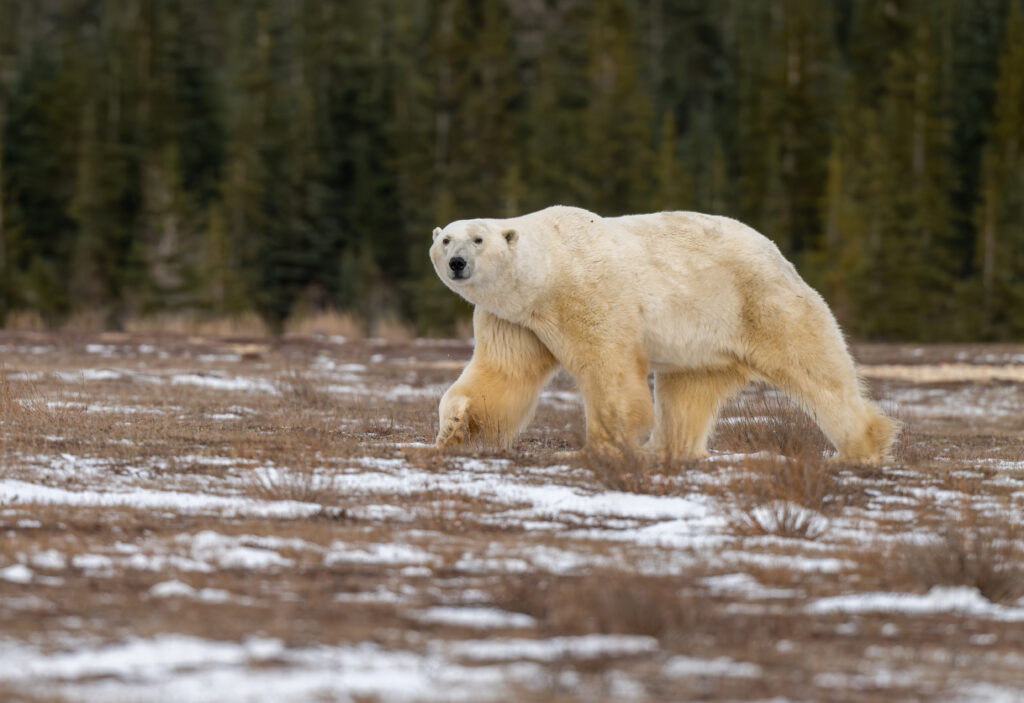
2. Churchill, Manitoba
Churchill is one of the most iconic wildlife photography destinations in Canada, and it earns that reputation honestly. This is polar bear country. When photographers imagine the great northern wildlife experiences of the world, Churchill is always in that conversation, and it should be.
There are not many places where you can head out with a camera and know that your subject is one of the planet’s most powerful and recognizable wild animals. Churchill offers that in a landscape that feels stark, northern, and dramatic in all the right ways. Travel Manitoba even calls the region the “Polar Bear Capital of the World,” which is not exactly subtle branding, but in this case it fits.
Best time of year to go and why
For classic polar bear photography, the best time is October and November. Travel Manitoba identifies those months as prime viewing season, when bears move from their summer habitat on the tundra back toward Hudson Bay and gather as they wait for sea ice to form. If you want the strongest chance at those unforgettable Churchill polar bear images, this is the window.
What kind of weather to expect
This is no place for optimism dressed as outerwear. Expect snow, cold, wind, and real northern conditions. Travel Manitoba specifically recommends insulated layers, boots, gloves or mitts, headwear, and long underwear during peak season. Also bring extra camera batteries, because cold weather treats batteries like an all-you-can-eat buffet.
Wildlife species you can photograph
The main subject here is the polar bear, and that alone is enough to put Churchill on this list. Depending on the season, Churchill can also offer Arctic foxes, ptarmigan, ravens, northern lights, belugas, and migratory birds, but for most wildlife photographers, polar bears are the reason to go.
Suggested camera gear and accessories
For Churchill, I would suggest:
- A 100-400mm, 180-600mm, or 200-500mm lens
- A 70-200mm for more environmental portraits
- A second camera body if possible
- Plenty of extra batteries, kept warm inside your coat
- Extra memory cards
- Gloves that you can actually operate a camera in
- A weather-resistant pack
- A bean bag or other support, depending on how you will be photographing
Why I love this destination
I love Churchill because it strips wildlife photography down to something simple and powerful. You are out there in the north, in the cold, looking at an animal that still feels like a symbol of true wilderness. Polar bears have a presence that is difficult to describe until you see one in person. The whole setting feels raw and honest.
It is also one of those places that makes every little comfort back home feel like luxury. After Churchill, a normal cup of coffee in a warm room can feel like five-star living.
We do not currently have a Churchill workshop on the schedule, but it remains one of the great wildlife photography destinations in Canada. If photographing polar bears is high on your list, Churchill deserves your attention.
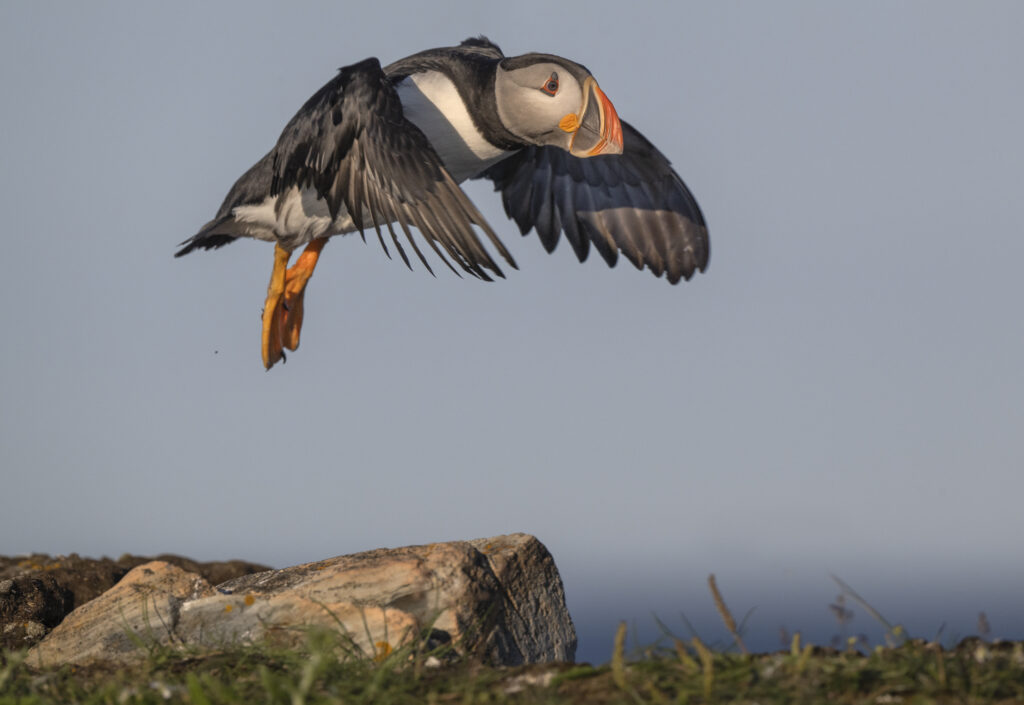
3. Newfoundland
Newfoundland is one of my favorite places in Canada for wildlife photography because it offers so much reward without making things overly complicated. It is rich in seabird photography, strong for whales in season, and full of beautiful coastline that adds real atmosphere to your images.
It is also one of those places with personality. The cliffs are dramatic, the weather has character, and the wildlife feels close enough to keep things exciting. Newfoundland and Labrador’s tourism materials highlight puffin colonies, major seabird sites, and whale activity across the province, and for photographers that combination is hard to beat.
Best time of year to go and why
For seabirds, puffins, and strong wildlife opportunities, I would point photographers toward late spring through early summer, especially June and early July. Newfoundland and Labrador notes that puffins breed in colonies from early May to mid-September, and places like Witless Bay and Cape St. Mary’s are especially productive in the summer nesting season.
What kind of weather to expect
Expect cool coastal weather, wind, fog, drizzle, and sudden shifts. That is part of the Newfoundland experience. You can have lovely light one minute and be digging for a jacket the next. The good news is that the changing conditions often add mood and atmosphere to seabird and coastal images rather than taking away from them.
Wildlife species you can photograph
Newfoundland is excellent for Atlantic puffins, common murres, razorbills, black guillemots, black-legged kittiwakes, Leach’s storm-petrels, gulls, northern gannets, and in some locations humpback and minke whales nearby. Witless Bay in particular is noted for huge seabird numbers, while Cape St. Mary’s is one of the most accessible seabird nesting sites in the world.
Suggested camera gear and accessories
For Newfoundland, I would suggest:
- A 100-400mm or longer wildlife lens
- A 70-200mm
- A 24-70mm for storytelling images and landscapes
- A wide-angle for coastal scenes and weather
- A rain cover
- Waterproof footwear
- Extra cards and batteries
- Lens cloths
- A tripod if you also want to photograph the coastline more seriously
Why I love this destination
I love Newfoundland because it is just plain fun to photograph. Puffins look like they got dressed in a hurry and never checked a mirror. Gannets bring elegance. The cliffs bring drama. The whales add surprise. And the whole place has a heartbeat to it.
This is one of those destinations where you can come home with a very full portfolio in a relatively short time, and that matters for workshop guests who want both excitement and variety.
We offer numerous Newfoundland seabird workshops, and they are a fantastic fit for photographers who love birds, coastal scenery, and the energy of a place that always seems to have something happening.
4. Point Pelee, Ontario
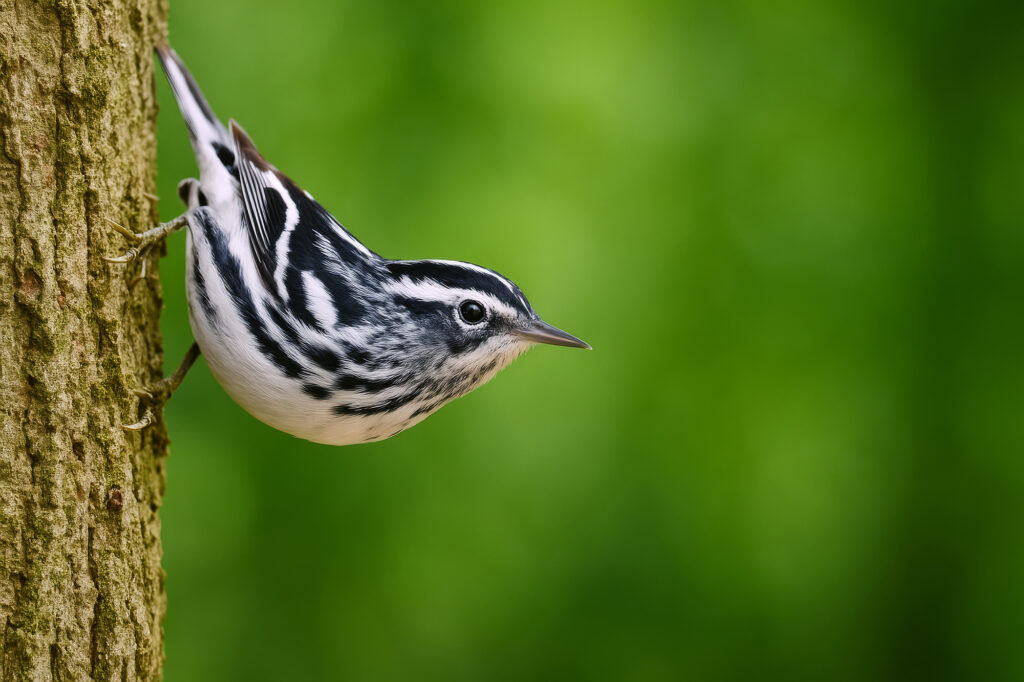
Point Pelee is a different kind of wildlife destination, but it absolutely belongs in the top five. This is not about giant mammals or remote wilderness. It is about migration. It is about timing. It is about being in the right place when songbirds drop in after crossing Lake Erie.
Parks Canada notes that Point Pelee is one of the best inland locations in North America to observe bird migration, with more than 390 species recorded in the area. That is a serious number, and it is why bird photographers return year after year.
Best time of year to go and why
For photography, the standout season is spring migration in May. Parks Canada’s Festival of Birds runs from May 1 to May 18 in 2026, and the park explains that spring migrants often arrive after nocturnal flights over Lake Erie, making the peninsula one of the first places they land to rest and feed. That combination of geography and migration timing is what makes Point Pelee so special.
What kind of weather to expect
Expect cool mornings, mild afternoons, occasional wind, and shifting spring conditions. Weather fronts can affect migration, and while that may mean more layers for you, it can also mean excellent bird activity. It is the kind of place where a calm morning can feel magical and a sudden shift in weather can turn into a very good day for photography.
Wildlife species you can photograph
Point Pelee is all about songbirds and migrants. Depending on timing, you may photograph warblers, vireos, tanagers, orioles, thrushes, flycatchers, woodpeckers, grosbeaks, and the occasional rarity. For bird photographers, especially those wanting spring color and variety, it is one of the best destinations in Canada.
Suggested camera gear and accessories
For Point Pelee, I would suggest:
- A 100-400mm, 180-600mm, or similar wildlife lens
- An 800mm lens is not too much lens
- A fast camera body if you have one
- Plenty of memory cards
- Sturdy tripod with a gimbal head
- Comfortable footwear
- A light backpack
- Rain gear for yourself
- Optional binoculars
- Patience, because sometimes the best bird shows up right after you say, “Well, maybe it’s slow today”
Why I love this destination
I love Point Pelee because it proves you do not need huge animals to have a huge wildlife photography experience. A brightly lit warbler at eye level on a spring morning can be every bit as thrilling as a larger subject. The place has energy. There is always the possibility that the next trail, the next tree, or the next few minutes will bring something special.
It is also one of my favorite places to watch photographers get hooked. One good May morning at Point Pelee and suddenly everybody understands why bird photographers act the way they do.
We run a Point Pelee spring migration workshop each year when the songbirds return. If you want to improve your bird photography and experience one of Canada’s best migration events, this is a workshop worth looking at closely.
5. Vancouver Island, British Columbia
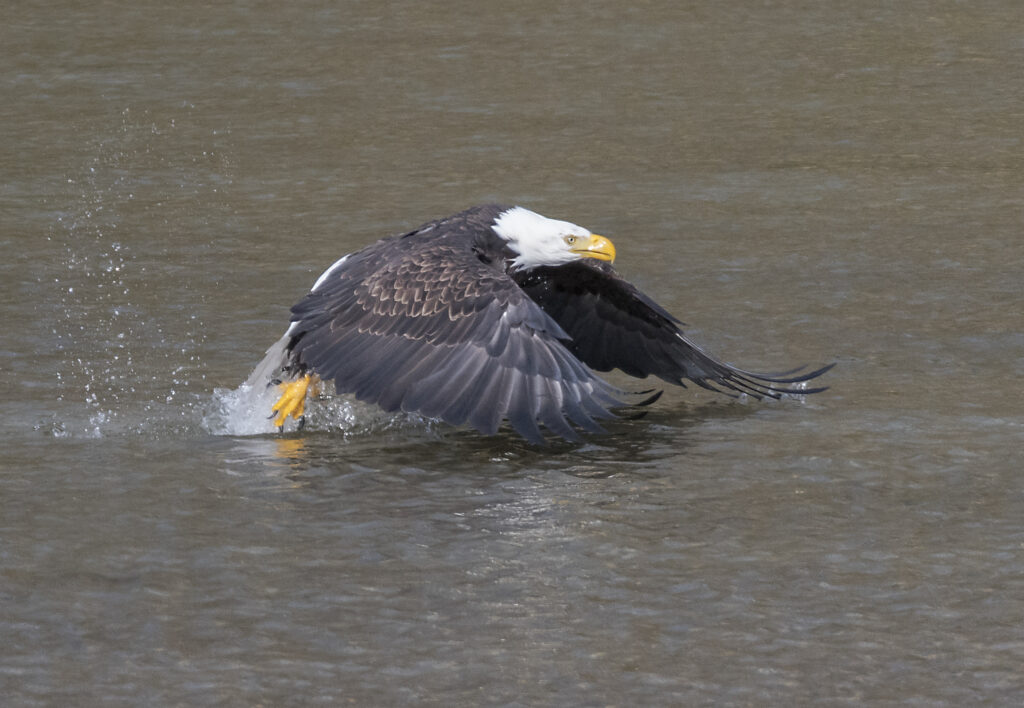
Vancouver Island closes out my list because it is one of the most versatile wildlife photography destinations in Canada. You can build a very complete workshop here because the subject matter is so broad. Depending on where you go and the time of year, you may have the chance to photograph bald eagles, whales, sea lions, seals, black bears, sea otters, shorebirds, and sometimes coastal wolves. Tofino’s tourism materials highlight the diversity of wildlife in Clayoquot Sound, and Vancouver Island North points to strong eagle activity during salmon spawning season.
Best time of year to go and why
This one depends a bit on the subject.
For bald eagles, early summer and fall are especially strong. September and October are excellent months because salmon are spawning, and rivers attract eagles in larger numbers. But May and June at a location we go to is amazing… it’s a virtual feeding frenzy as the bait fish get pushed to the surface when the tides come in. It is probably the best bald eagle photography we have ever witnessed.
For whales and broader marine wildlife around Tofino, the season is longer. Tourism Tofino notes whale activity from April through October, with gray and humpback whales feeding in Clayoquot Sound and transient orcas occasionally passing through.
What kind of weather to expect
Expect mild coastal temperatures, moisture, marine weather, and fast changes in light and conditions. It is more forgiving than Churchill, but it is still very much a west coast wildlife destination. Mist, rain, cloud, and shifting marine air are part of the deal, and often part of the look.
Wildlife species you can photograph
Vancouver Island offers a rich mix, including bald eagles, gray whales, humpback whales, orcas, black bears, river otters, sea lions, seals, shorebirds, and in some areas coastal wolves. Tofino tourism specifically notes black bears, coastal wolves, otters, and bald eagles among the wildlife you may encounter.
Suggested camera gear and accessories
For Vancouver Island, I would suggest:
- A 100-400mm or longer wildlife lens
- A 70-200mm
- A 24-70mm for wider wildlife scenes, coastlines, and storytelling
- A rain cover
- A dry bag for boat-based days
- Extra batteries and cards
- A polarizer for landscapes
- A monopod or light support if that suits how you work
Why I love this destination
I love Vancouver Island because it gives photographers options. It is not a one-subject destination. It is a place where you can wake up thinking about bald eagles and end the day with marine mammals, shoreline birds, and beautiful coastal atmosphere. It is productive, varied, and comfortable enough to work well for a broad range of photographers.
It is also one of those places where even the drive can be distracting. You start out headed for wildlife and then find yourself stopping because the coast decided to show off again.
We run numerous workshops on Vancouver Island, including Tofino workshops at times and a bald eagle-focused workshop. If you want a Canadian wildlife destination with a lot of variety, this is one of the most flexible and rewarding options we offer.
Honorable Mention: Northern British Columbia for Grizzly Bears
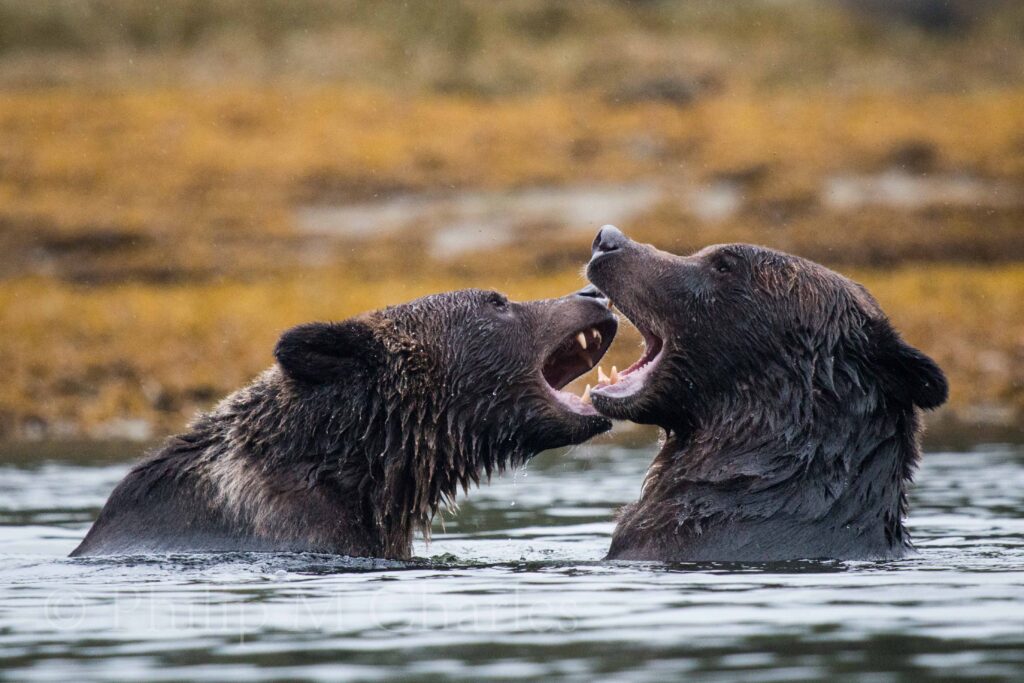
If I were adding one more destination to this list, it would be Northern British Columbia for grizzly bears. I am keeping it as an honorable mention rather than a formal top-five entry only because it is a broader region, not one neat, tidy destination with one obvious base. But make no mistake, northern BC is serious grizzly country. It offers some of the most memorable bear photography opportunities in Canada, especially for photographers who like remote landscapes, salmon-rich rivers, and wildlife experiences that still feel genuinely wild. One of the crown jewels here is Khutzeymateen/K’tzim-a-deen Grizzly Sanctuary, which BC Parks describes as Canada’s first grizzly bear sanctuary and home to one of the highest concentrations of grizzly bears in Canada.
Where grizzlies can be photographed in Northern BC
The two most practical and photographically meaningful grizzly areas in northern BC are:
1. Khutzeymateen/K’tzim-a-deen Grizzly Sanctuary, accessed from Prince Rupert
This is the flagship grizzly photography area in northern BC. BC Parks notes that the protected area is internationally known as Canada’s first grizzly bear sanctuary, and bear viewing is one of the core human uses of the area. Access is tightly managed through a collaborative system involving BC Parks, First Nations, and permitted bear-viewing guides, which is exactly what you want in a sensitive wildlife area.
2. Stewart, BC / Hyder, Alaska at Fish Creek Wildlife Observation Site
This is one of the more accessible grizzly photography opportunities tied to northern BC. Stewart Tourism highlights that from Stewart you can go into nearby Hyder to photograph black bears and grizzlies hunting salmon at Fish Creek. The Alaska Department of Fish and Game adds that brown bears, black bears, and occasionally wolves can be observed there from an elevated boardwalk, with the best viewing during the salmon runs.
Beyond those two, there are other northern BC wilderness regions where grizzlies live and can certainly be encountered, including Tatshenshini-Alsek Park, which BC Parks describes as a spectacular northern BC park containing glacier-cloaked peaks, wild rivers, and grizzly bears. That said, Tatshenshini-Alsek is much more remote and rugged, so I would view it as a wilderness expedition setting rather than a straightforward wildlife photography workshop base.
Best time of year to go and why
For northern BC grizzly photography, I would break it into two main windows.
Late spring to early summer can be excellent in coastal areas like Khutzeymateen, when bears are actively feeding along estuaries and shorelines after winter. The north coast wildlife season around Prince Rupert is generally strongest from mid-July through September for overall wildlife viewing, but the broader guided bear-viewing season in BC typically runs from May through October, depending on the area and food sources.
For Stewart/Hyder and Fish Creek, the prime time is much more specific: mid-July through mid-September, when chum and pink salmon runs draw bears into the clear, shallow waters. Stewart Tourism simplifies that even further for visitors by calling out July and August as the months to head to the platform to watch salmon and bears together.
What kind of weather to expect
Northern BC is not the place to pack like an optimist. Expect cool temperatures, moisture, overcast skies, rain, and fast-changing conditions, especially on the coast. In places like Khutzeymateen, BC Parks specifically warns about high winds and tidal fluctuations in the inlet. In more interior or alpine northern regions like Tatshenshini-Alsek, BC Parks notes that summer conditions are highly variable and that snow is possible any time of year. That is useful information for photographers, because it tells you two things: bring proper gear, and expect dramatic atmosphere.
Wildlife species you can photograph
The headline subject is the grizzly bear, but northern BC rarely gives you just one thing to photograph. In Khutzeymateen, the focus is overwhelmingly on coastal grizzlies in a spectacular fjord and rainforest setting. Around Stewart/Hyder, you can photograph grizzlies, black bears, and occasionally wolves, along with a range of birds and smaller wildlife. The Alaska Department of Fish and Game also notes species such as bald eagles, great blue herons, common mergansers, geese, gulls, mink, and beavers in the Fish Creek area.
Suggested camera gear and accessories
For northern BC grizzly photography, I would suggest bringing:
- A 100-400mm, 180-600mm, or 200-500mm wildlife lens
- A 70-200mm for environmental bear portraits
- A second body with a 24-70mm for landscapes and wider storytelling images
- A rain cover for camera and lens
- A dry bag if you are working from boats
- Extra batteries and memory cards
- A monopod or compact support if you prefer one
- Good waterproof outerwear for yourself
- Several microfiber cloths, because northern BC has little interest in keeping your front element dry
Why I love this destination
I love northern BC for grizzlies because it still feels big. It feels untamed. You are not showing up to a polished wildlife set where nature hits its mark on cue. You are entering real bear country, where salmon, tide, weather, and light all shape the day. That makes the good sightings feel earned.
There is also something special about the sheer mood of the place. Northern BC gives you grizzlies with mountains, rivers, estuaries, rainforest, fog, and the kind of weather that makes everything feel a little more dramatic. It is a destination that asks photographers to stay patient, stay alert, and keep their cameras ready. In other words, it is very good at separating wildlife photographers from people who merely enjoy owning telephoto lenses.
We do not currently list a dedicated northern BC grizzly bear workshop in the same way we do for some of our other Canadian destinations, but it is absolutely a region worth watching for future possibilities. If grizzly photography in wild coastal and northern landscapes speaks to you, this is one of the most compelling honorable mentions I could add to the list.
Final Thoughts
Canada is blessed with incredible wildlife photography opportunities, but these five destinations stand above the rest for me. Each offers something different. The Great Bear Rainforest gives you mystery, mood, and unforgettable encounters. Churchill gives you polar bear drama in the north. Newfoundland delivers seabirds, whales, and coastal charm. Point Pelee brings migration to life at close range. Vancouver Island gives you variety and classic west coast atmosphere.
The real value of a workshop, though, is not just going to a good place. It is going at the right time, with the right plan, and with leaders who understand what photographers need in the field.
That is what we work hard to deliver at Akari Photo Tours.
We build our Canadian wildlife workshops around timing, light, weather, subject behavior, and the experience of the photographer. We do the planning. We handle the logistics. We put ourselves in the best places we can, at the best times we can, and then help our guests make the most of every opportunity that unfolds.
If one of these destinations is calling your name, I would love for you to travel with us. Join us in the Great Bear Rainforest for coastal wolves or bears, come to Newfoundland for seabirds, meet us at Point Pelee for spring migration, or head west with us to Vancouver Island. Canada still has places that can stop you in your tracks and remind you why wildlife photography never gets old.


