Learn about our Namibia photography workshop
By Kevin Pepper |
Namibia: Why it’s truly a photographer’s paradise
Some places feel like they were handcrafted for photographers—Antarctica with its surreal icescapes, Iceland’s rugged volcanic beauty, or Tanzania’s pulse-pounding wildlife migrations. And then… there’s Namibia.
Namibia doesn’t just offer stunning views—it performs for the camera. It’s where the land seems to strike a pose, the light shifts moods by the minute, and every frame feels like it belongs on the cover of a magazine. The landscapes are cinematic; the skies are endless, and the silence? Perfect for hearing your creative instincts kick into overdrive.
So, why is Namibia the dream destination for photographers of all kinds? Let’s dive in.

Easy to get there
While Namibia might feel like the edge of the world when you’re standing alone in the middle of Deadvlei or under a blanket of stars in Spitzkoppe, getting there is surprisingly simple.
Most international travelers arrive via Hosea Kutako International Airport in Windhoek, the capital city, with regular connections from major hubs like Johannesburg, Cape Town, Doha, France, and Frankfurt. From there, the adventure begins. Whether you’re joining us in a private 4×4 or hopping a scenic bush flight, the infrastructure is solid, the roads are well-maintained, and travel logistics are more straightforward than you’d expect for such a remote-feeling destination.
Namibia is one of Africa’s safest and most traveler-friendly countries. English is widely spoken, the visa process is straightforward for most nationalities, and the sense of calm and openness makes navigating it a joy.
**Update on Visa to enter Namibia** There have been some changes to the entrance requirements to Namibia. It is best to check before your trip to determine if you can get a VISA at your port of entry or you have to apply before you leave home.
Surprisingly delicious: The food in Namibia
Namibia might be known for its landscapes and wildlife, but the food scene is an unexpected delight. From hearty, European-influenced dishes to traditional African flavors, meals here are flavorful, satisfying, and often served with warm hospitality. Think tender game meats like oryx or kudu, freshly baked bread, rich stews, and mouthwatering braais (barbecues) under the stars. And don’t even get us started on the apple pie in Solitaire—yes, it’s legendary, and yes, it’s worth the drive. Whether you’re dining in a remote desert lodge or enjoying a simple roadside meal, the food in Namibia adds another layer of pleasure to the photographic journey.

Comfort in the wild: Accommodations in Namibia
While Namibia offers a range of lodging options—including budget-friendly campsites for the rugged adventurer—we believe a long day of chasing light and composing the perfect shot deserves a comfortable bed and a hot shower at the end of it. We spoil our guests with carefully selected lodges and boutique accommodations that balance comfort, charm, and location. Picture cozy thatched-roof chalets with stunning desert views, luxury tents with en-suite bathrooms near wildlife reserves, and elegant desert lodges where the night sky is your ceiling. You’ll rest well, recharge your gear (and yourself), and wake up ready for another unforgettable day in the field—no sleeping bag required.
The drama of the dunes
Let’s start with the main attraction for landscape lovers: the dunes.
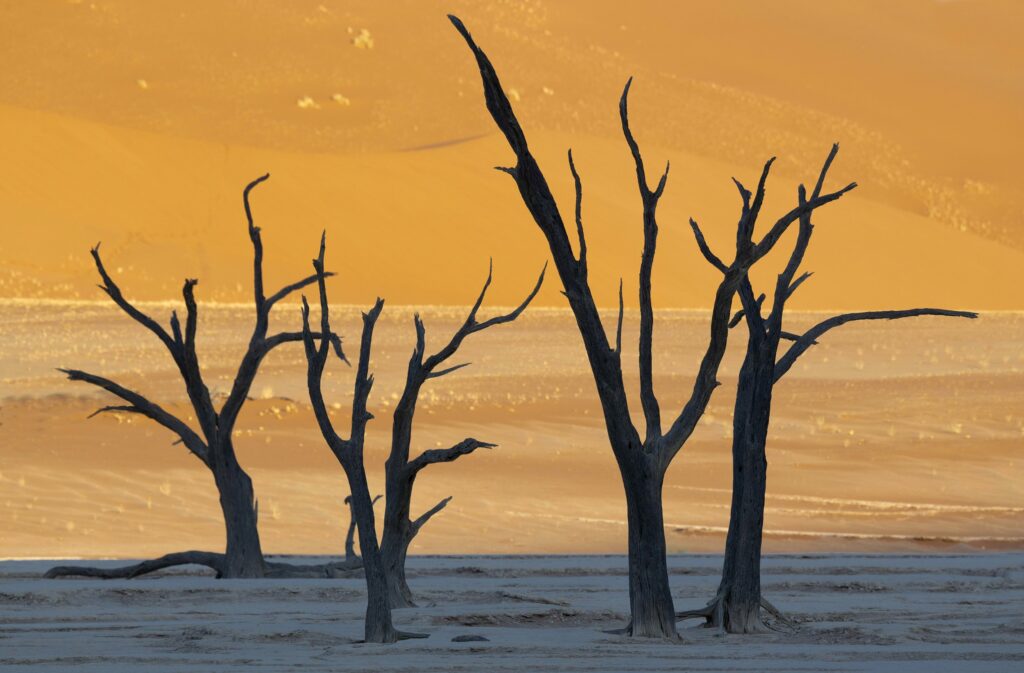
Namibia is home to some of the tallest dunes in the world, rising like glowing waves of copper and gold in the Namib Desert. At Sossusvlei and Deadvlei, the light at sunrise and sunset turns these sculpted giants into fire-lit masterpieces, with shadows so dramatic they deserve their own soundtrack.
Photograph them from the ground, and you’ll capture elegant lines and almost abstract textures. Take to the air in a helicopter, and the perspective becomes otherworldly—perfect symmetry, endless patterns, and a sense of scale that leaves your jaw somewhere near your boots. If you’ve ever wanted your portfolio to scream “epic,” this is where it starts.

Ghost towns that whisper stories
And then there’s Kolmanskop—a once-thriving diamond mining town now quietly surrendering to the desert. Step inside, and you’re met with a surreal blend of human history and nature’s slow, steady reclaiming. Sunlight spills through shattered windowpanes, illuminating drifting sand that curls across tile floors like smoke. Timeworn wallpaper peels in layers, textures beg to be captured, and every room tells a different story—of wealth, abandonment, and the unstoppable power of nature.
For photographers drawn to decay, to the kind of beauty that’s both eerie and elegant. I have heard people say, “Kolmanskop isn’t just a stop—it’s a pilgrimage.”
A night sky that will leave you speechless
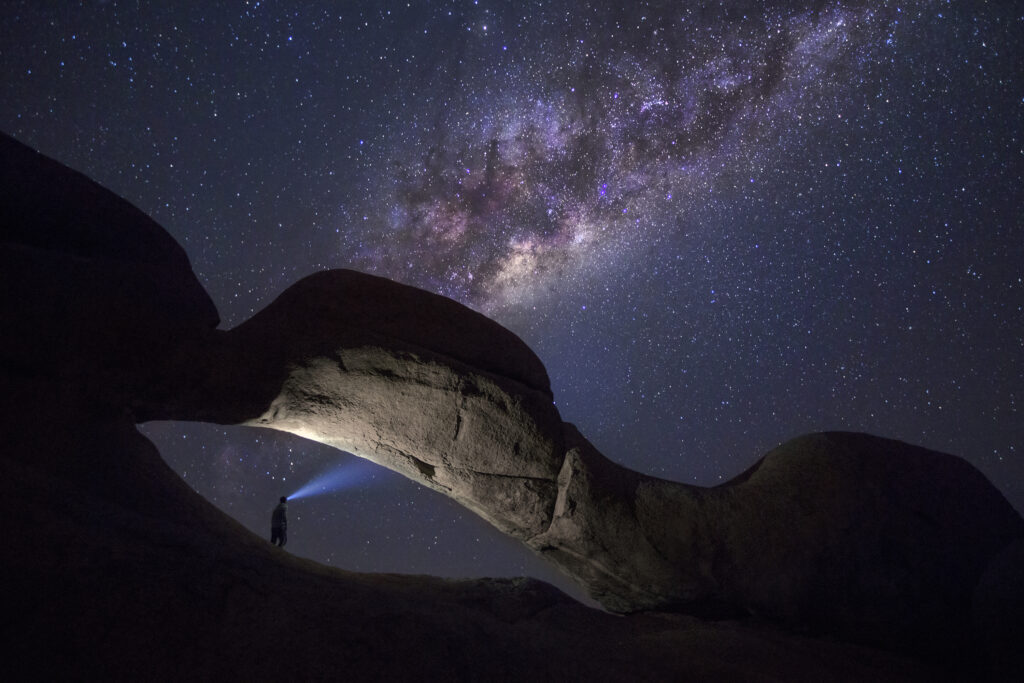
If your version of paradise involves the Milky Way stretching across the sky like a cosmic river or capturing star trails spiraling above ancient granite peaks, then Namibia will steal your heart—and fill your memory cards. Around Spitzkoppe, the dramatic rock formations become surreal silhouettes against some of the darkest skies on the planet. Further south, the NamibRand Nature Reserve holds official Dark Sky Reserve status, offering skies so clear and crisp that you’ll feel like you’re photographing the universe itself.
Bring your tripod, your widest lens, and a sense of wonder. Out here, beneath the starlight and silence, you won’t just create unforgettable nightscapes—you’ll remember exactly why you fell in love with photography in the first place.

Quiver Tree Forest: Sculptures of Time and Light
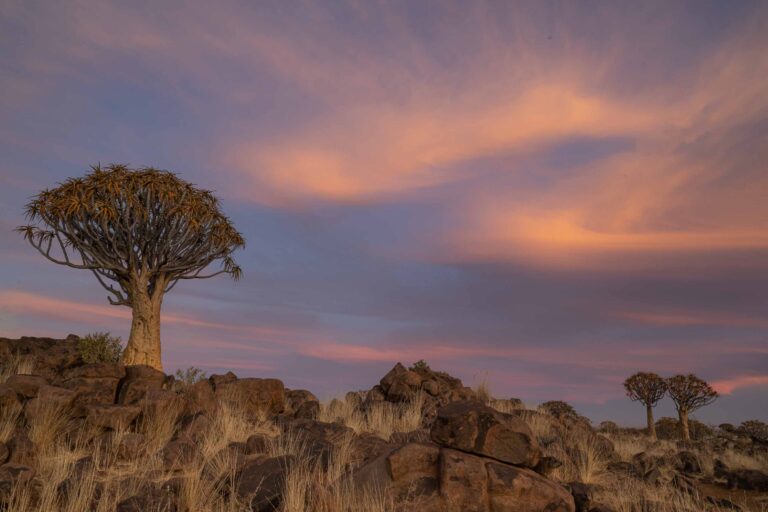
In the heart of southern Namibia, near Keetmanshoop, lies the Quiver Tree Forest—a surreal assembly of towering aloe dichotoma trees that have stood sentinel for centuries. These unique trees, with their distinctive forked branches and golden bark, create an otherworldly landscape that beckons photographers seeking both drama and tranquility.
Photographic Highlights:
- Golden Hour Magic: At sunrise and sunset, the trees are bathed in warm, soft light, casting intricate shadows on the rocky terrain. This is the prime time to capture the forest’s ethereal beauty.
- Astrophotography Haven: The region’s minimal light pollution offers crystal-clear night skies, making it an ideal location to frame the Milky Way against the silhouettes of quiver trees.
- Textural Close-Ups: The quiver trees’ corky, flaking bark provides rich textures that, when captured up-close, tell stories of resilience in an arid environment.
Cultural encounters that resonate
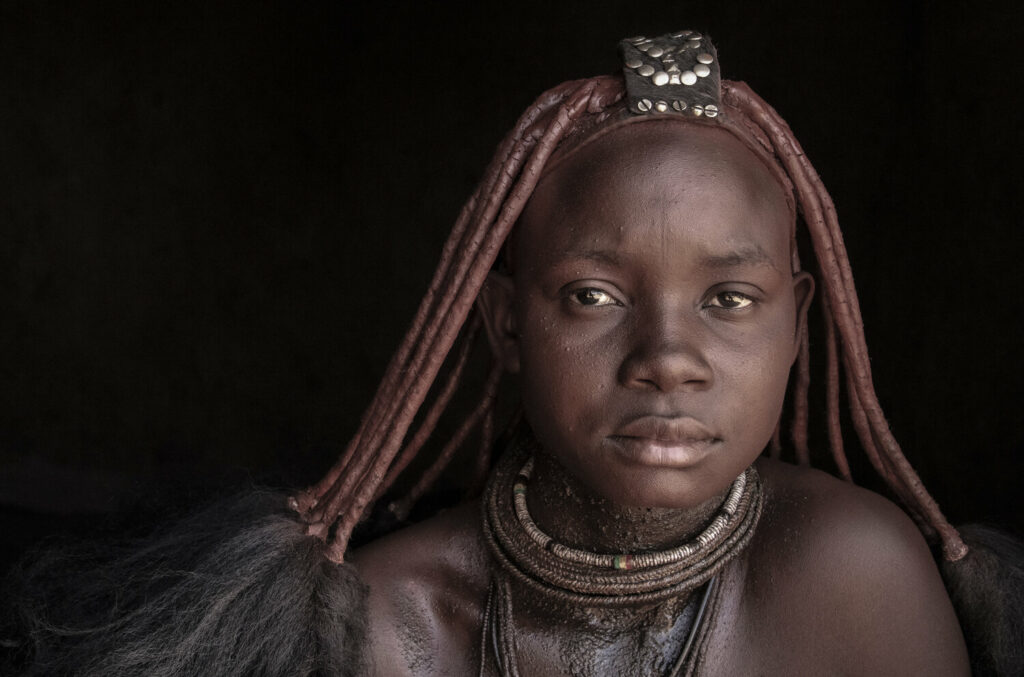
Photographing people in Namibia isn’t just a quick portrait and goodbye. The Himba and Herero people, among others, are open, engaging, and proud to share their culture. Conversations and laughter flow easily—even when you don’t share a language.
Their traditional attire, unique hairstyles, and beautiful natural surroundings make for deeply human, powerful imagery. But what stands out is how welcomed you’ll feel. This isn’t about taking photos of people but creating photos with them.
Wildlife, wild settings, and wild angles
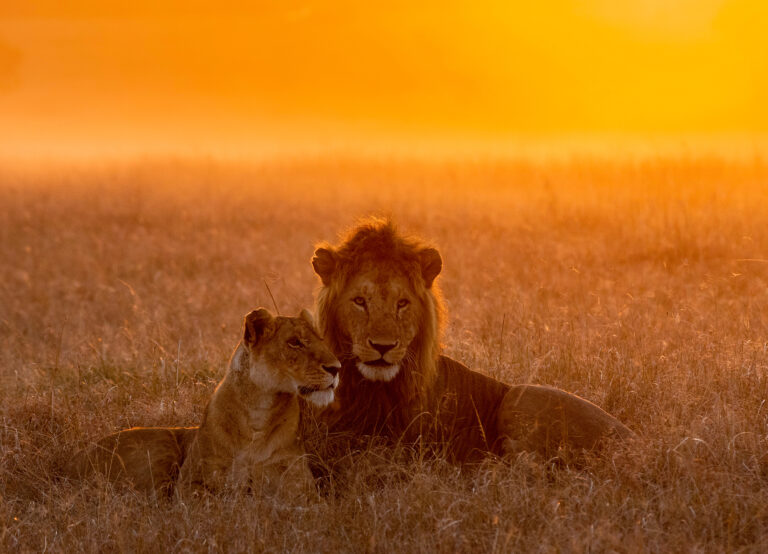
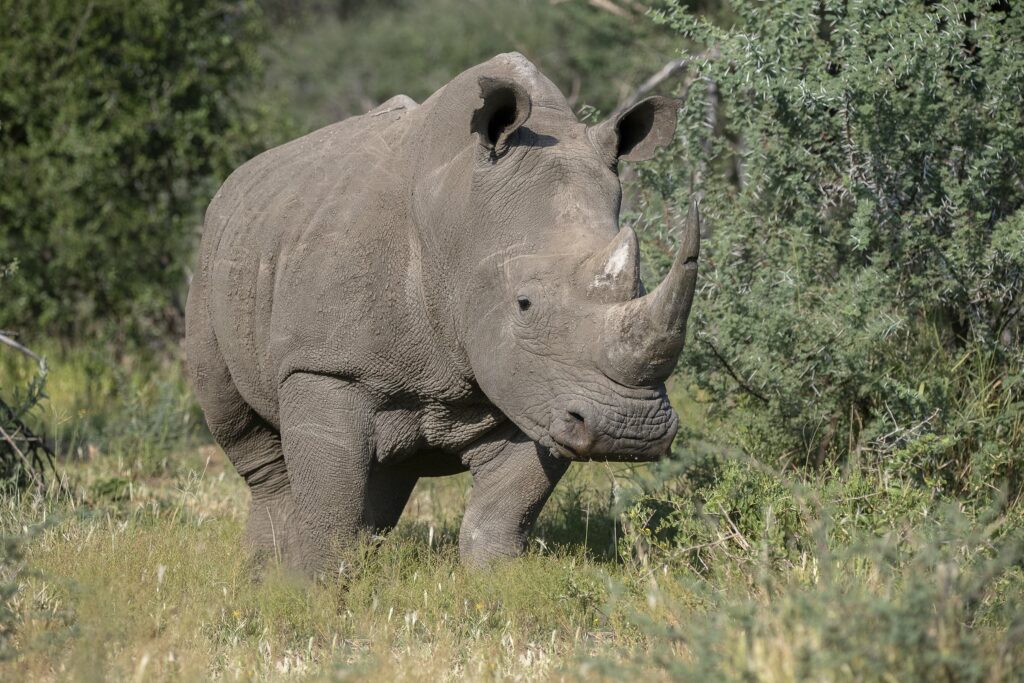
Etosha National Park is iconic, with its vast salt pans, dramatic light, and wildlife that seems to pose just right—elephants, lions, giraffes, and rhinos wandering through a dreamlike, bleached landscape. But the magic doesn’t stop there.
Across Damaraland, you might track desert-adapted elephants or catch a glimpse of the elusive black rhino. Seals gather in the thousands along the Skeleton Coast while jackals and brown hyenas lurk nearby. And in the southern reaches, you may even photograph oryx standing boldly on dune ridges, backlit by golden light.
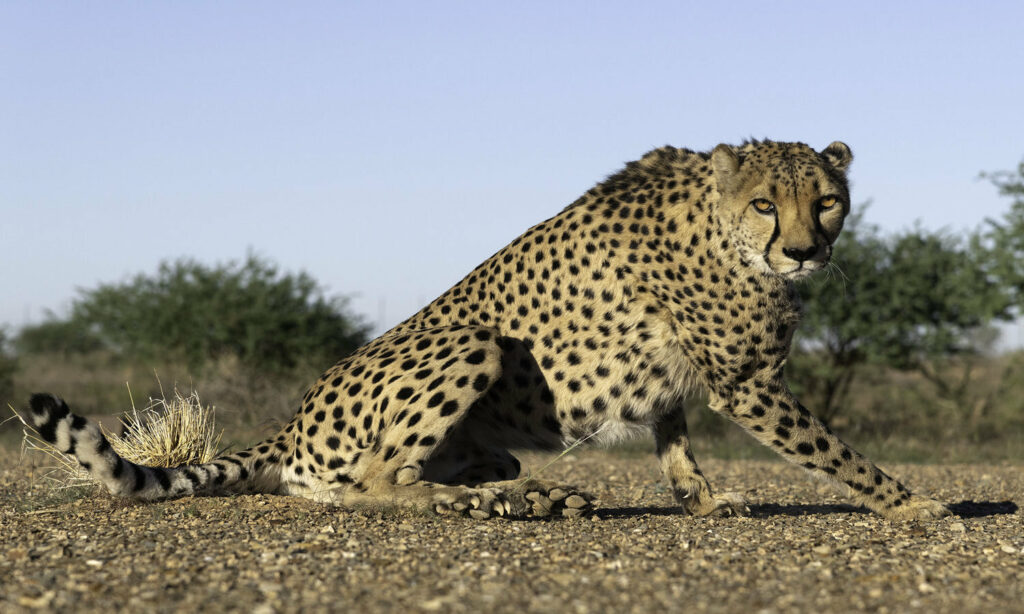
From ground-level hides where animals approach unaware to aerial photography flights that showcase herds moving like brushstrokes across vast terrain, Namibia offers a wild diversity of photographic opportunities.
Whether you’re after classic wildlife portraits, minimalist compositions, or dramatic action shots in alien-like settings, Namibia delivers in a single trip. It’s not just a safari; it’s a creative playground where wildlife and artistry collide.
How it’ll make you feel
Photographing in Namibia is exhilarating, peaceful, and downright addictive. You’ll feel like an explorer, an artist, and a storyteller all at once. One moment, you’re catching the morning glow on a lone oryx; the next, you’re lying under a sky that looks like it belongs to another planet. It’s a place that fills your memory cards and your soul.
Why Akari Photo Tours is the best way to experience Namibia
So, why should you join Akari Photo Tours for your Namibian adventure?
- We know the locations – Our guides have spent years exploring Namibia with cameras in hand and dust on their boots. We’ve chased the light and stars across endless dunes, scouted every angle in Kolmanskop’s crumbling halls, and sampled more than our fair share of apple pie to confidently declare that Solitaire serves the best in the southern hemisphere. We’ve learned where the magic happens—not by chance, but through trial and error and countless sunrises. That means you don’t have to waste precious time figuring it out. With us, you’ll be in the right place at the right moment, whether catching first light on a dune ridge or positioning yourself perfectly in a ghost town room as the sun cuts through a dusty window. With Akari Photo Tours, you’re not just joining a workshop—you’re benefitting from years of experience, scouting, and maybe just a little obsession with getting the shot.
- Small groups, big experiences – We keep our groups intentionally small—because in Namibia, size matters. With fewer people, you get the personalized attention you deserve, the flexibility to linger when the light is just right, and the space to compose your shot without distraction. More importantly, you avoid the chaos that larger groups can create in this delicate landscape. I’ve been to Namibia many times, and I’ve seen it all—tourists unknowingly hiking up the crest of a perfect dune just as someone’s capturing its untouched symmetry… footprints scattered through pristine sand in Kolmanskop… large groups wandering through Deadvlei during the best light, unintentionally stepping into each other’s frames. It doesn’t take much to ruin a once-in-a-lifetime shot. That’s why I’ll confidently say this: small groups aren’t just a luxury in Namibia—they’re essential. Trust me, your portfolio will thank you.
- Diverse photography opportunities – Landscapes, wildlife, night skies, culture—we curate an itinerary that covers it all and helps you grow as a photographer in every genre. Some of our workshops cover the entire country, some are focused on landscapes and astrophotography, and occasionally, we run wildlife-only safaris.
- Aerial access – We offer optional helicopter flights that open up the desert from a new angle—because some views are too good to keep your feet on the ground.
- We’re photographers, too – We know what it’s like to chase the shot, wait for the right moment, and get up before dawn for that perfect frame. We’re with you every step of the way—not just as guides but as fellow image-makers… but we will never get in your way.
Namibia isn’t just a destination—it’s a revelation. If you’re ready to fill your portfolio with jaw-dropping shots and create memories that stay with you long after the dust settles on your boots, see what a Namibia Photo Workshop can do for your photography.
If you want to read the other articles we have written about Namibia, please check those out in-depth articles. We have written about the Quiver Tree Forest, Spitzkoppe, the wildlife in Namibia, Deadvlei and Kolmanskop.
If you have any questions at all, please reach out to us. Akari Photo Tours will get you there. All you need to bring is your passion.